Flag quiz
A country flag quiz with all 195 UN states: pick from 4 names, type the country or find its flag, by region, alone or with up to 4 players.
The quiz shows 195 flags: the 193 United Nations member states plus the Holy See and the State of Palestine, its 2 observer states. A round asks 10 or 20 flags, every flag in a set, or today's ten. Each flag is named from 4 names or by typing it, or the named country's flag is found among 4.
Flags in this round: 10. The clock runs from the first flag. A right answer moves on by itself; after a wrong one the right answer stays on screen until you tap Next flag.
Every flag in this set, with its name (195)
In alphabetical order. The list follows the set chosen above.
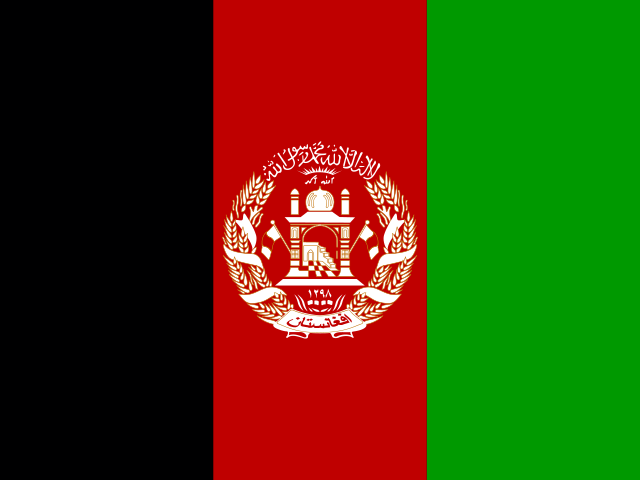 Afghanistan
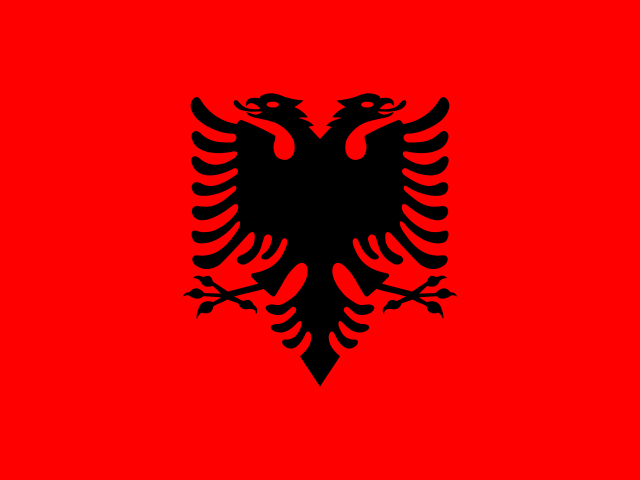 Albania
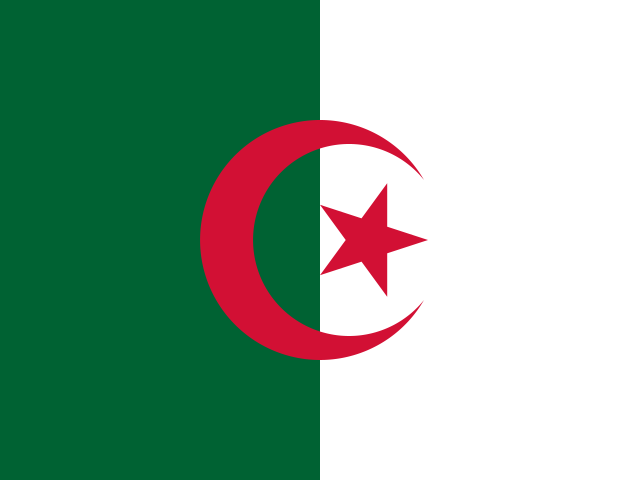 Algeria
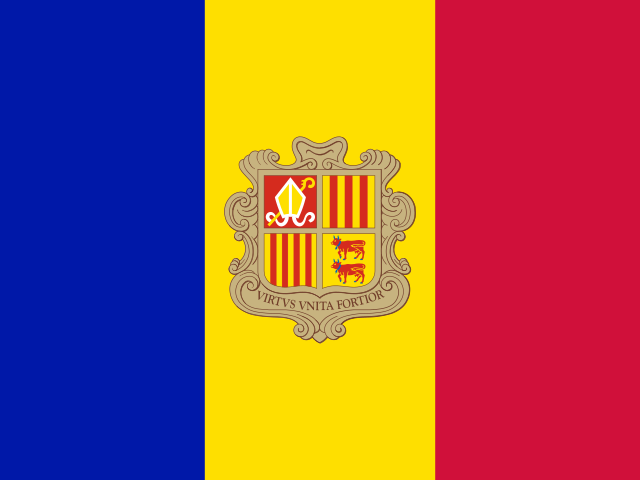 Andorra
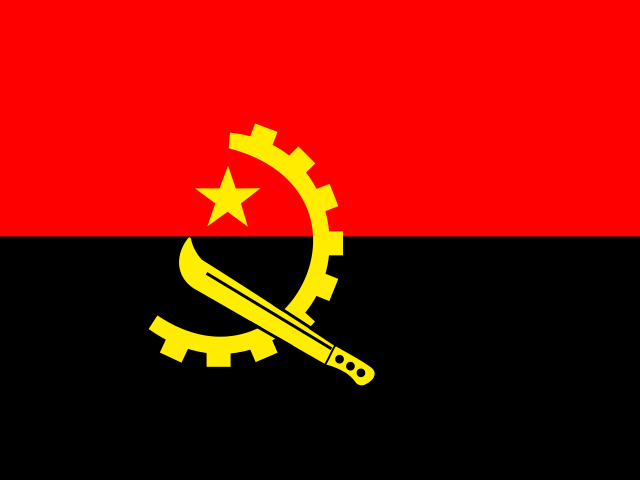 Angola
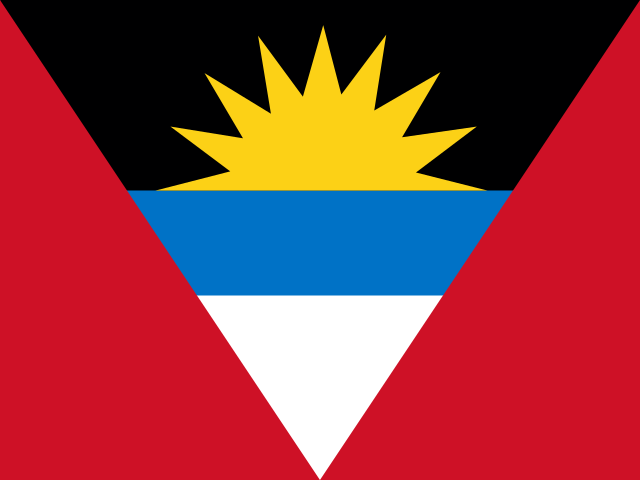 Antigua and Barbuda
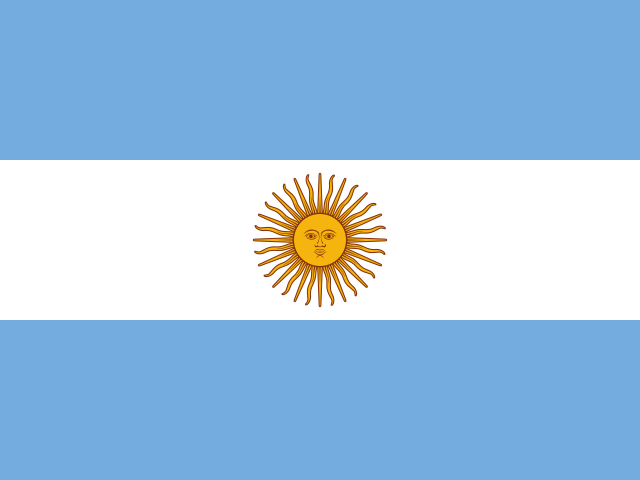 Argentina
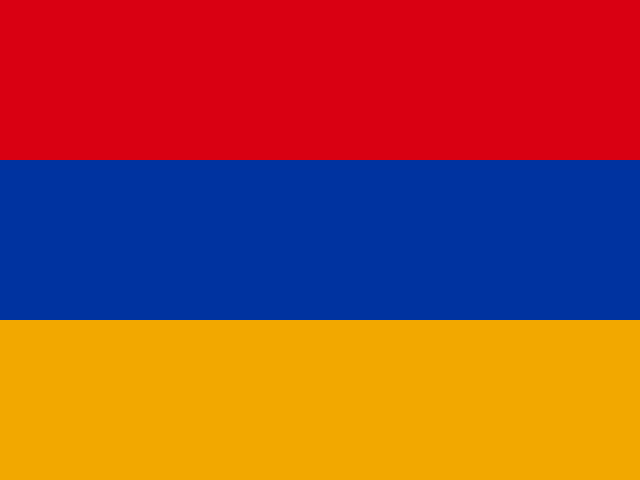 Armenia
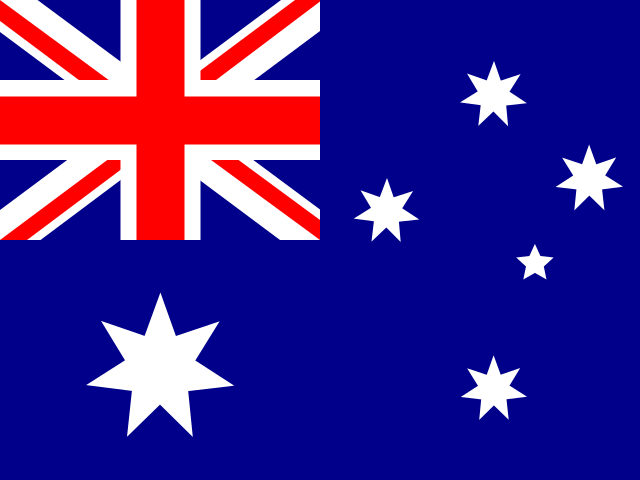 Australia
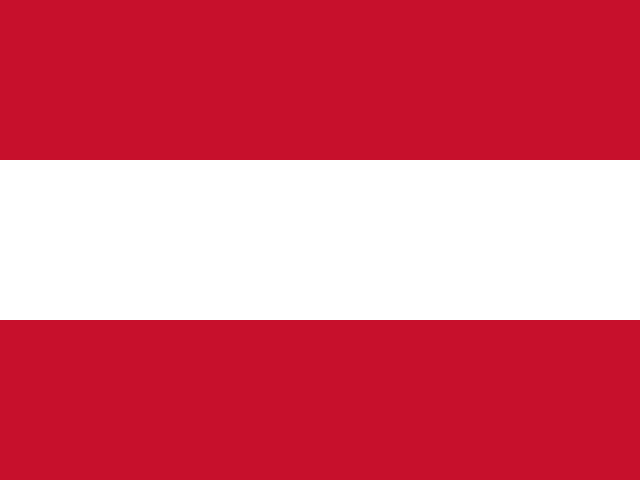 Austria
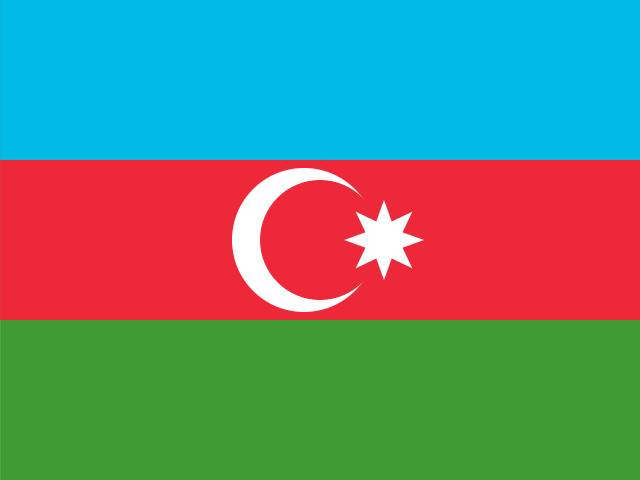 Azerbaijan
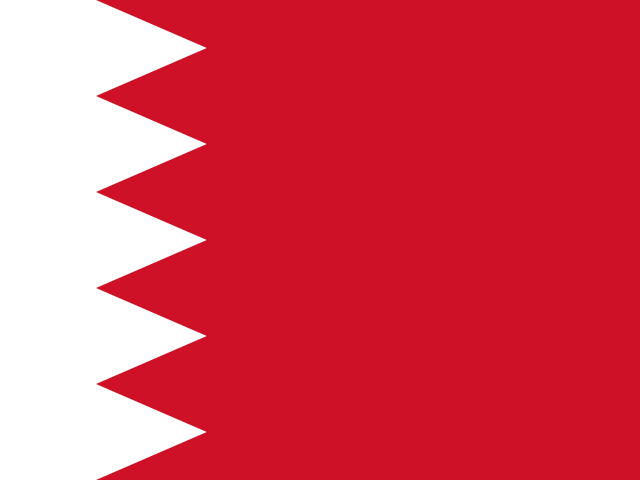 Bahrain
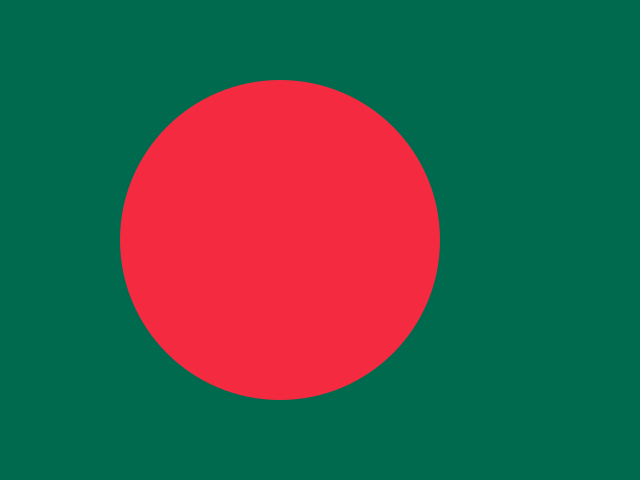 Bangladesh
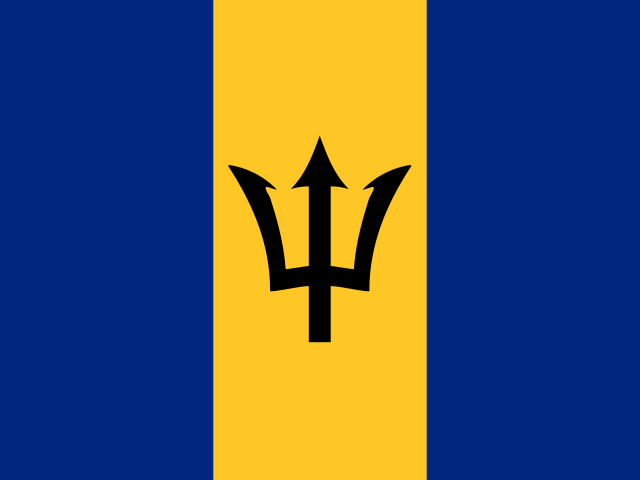 Barbados
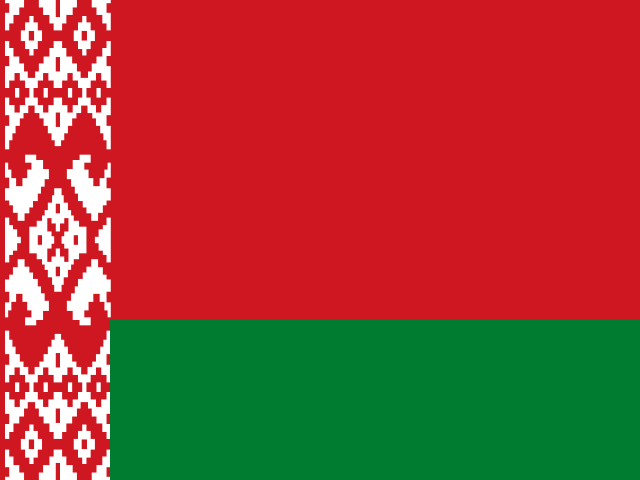 Belarus
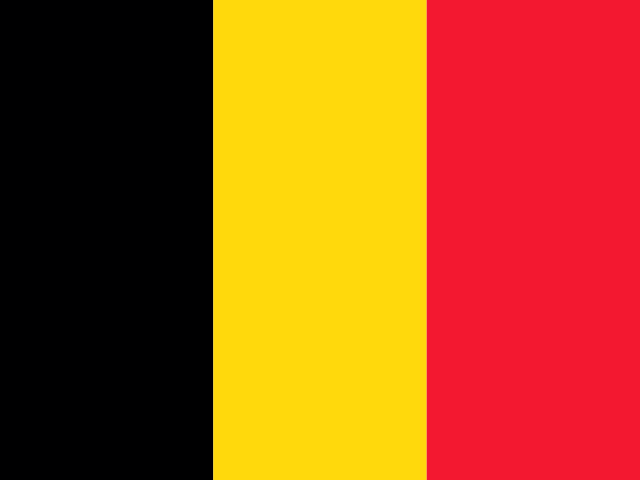 Belgium
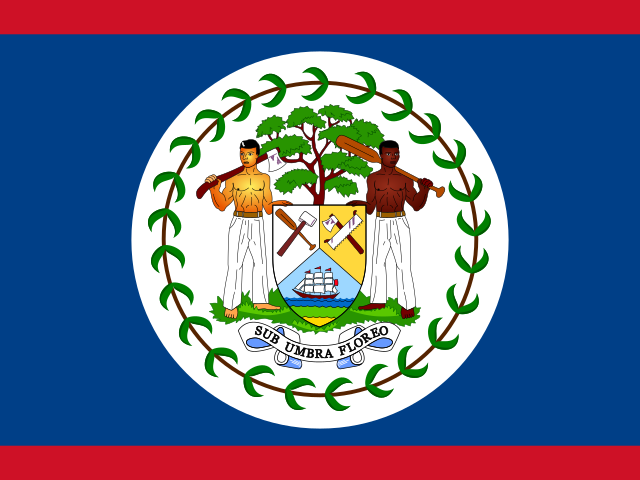 Belize
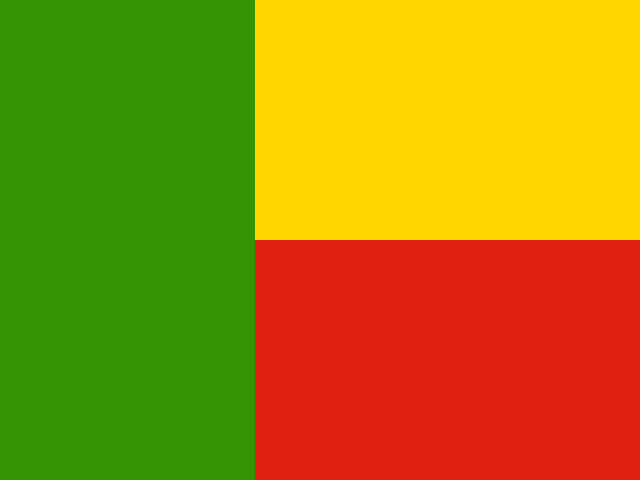 Benin
Benin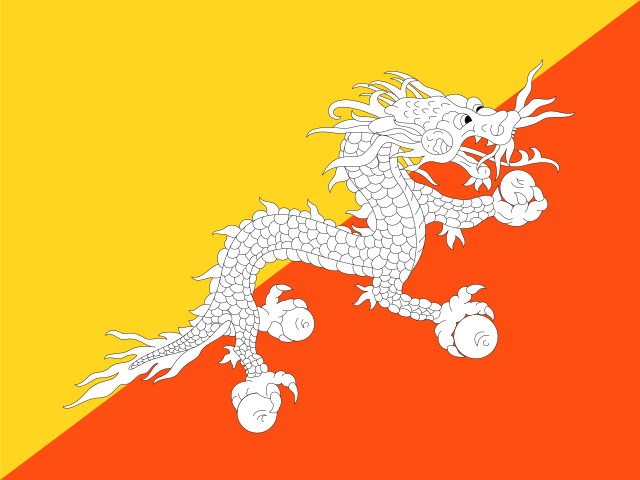 Bhutan
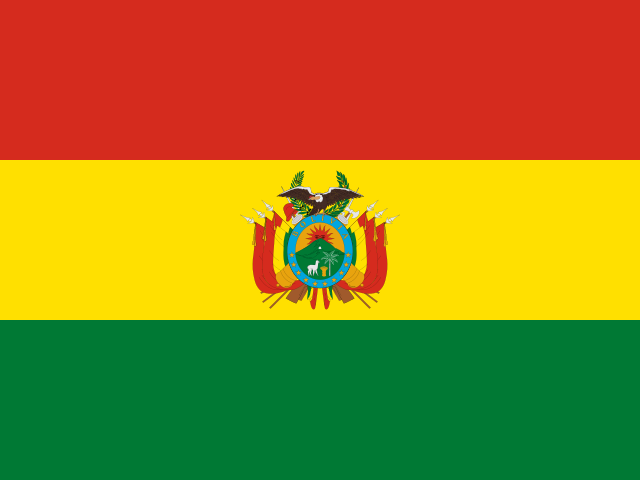 Bolivia
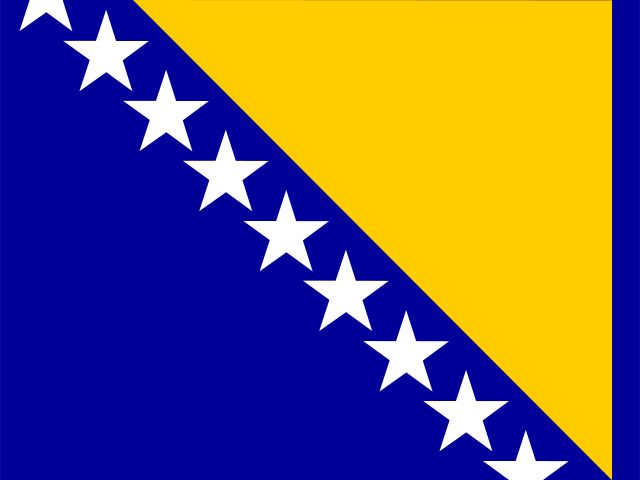 Bosnia and Herzegovina
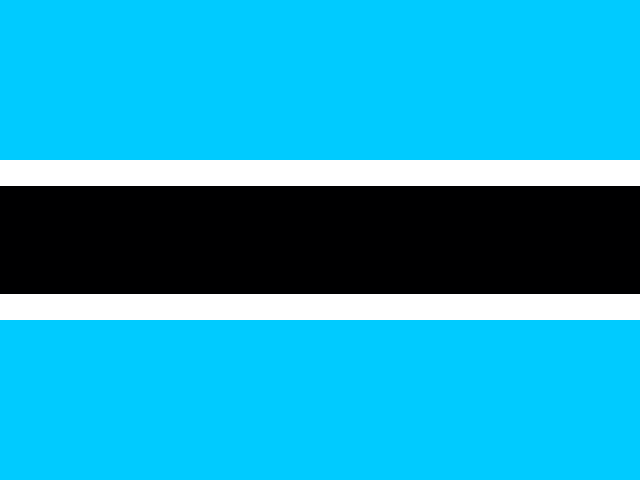 Botswana
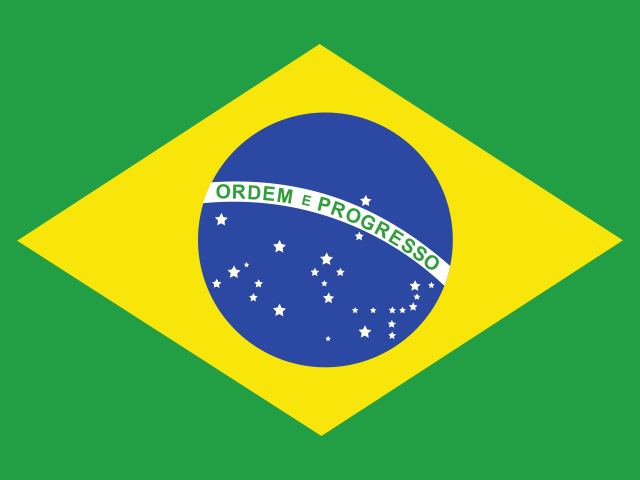 Brazil
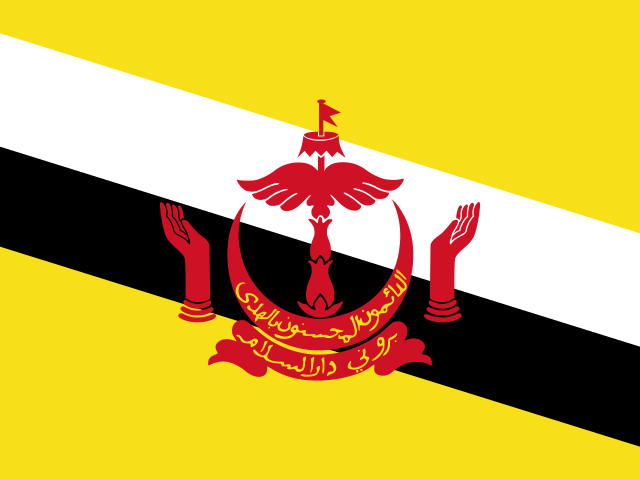 Brunei
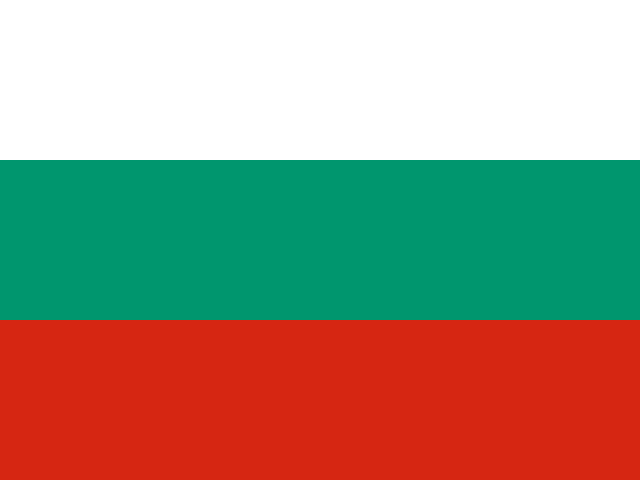 Bulgaria
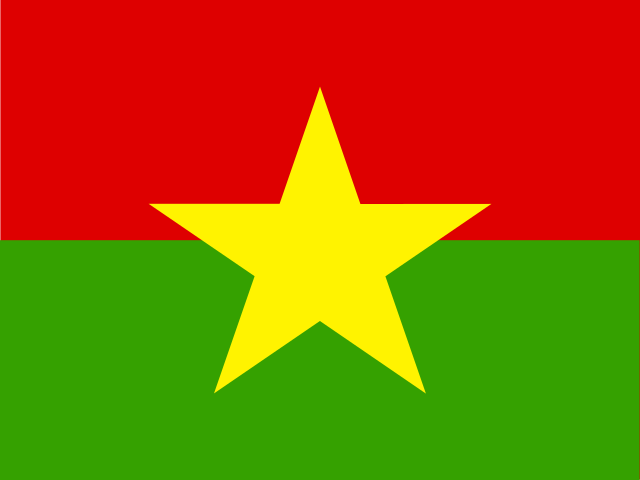 Burkina Faso
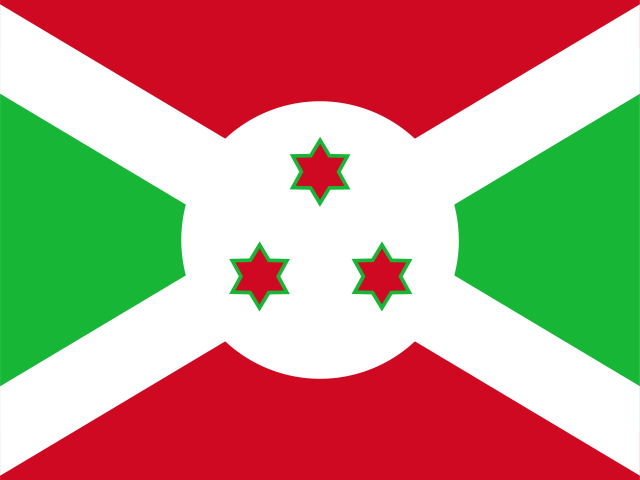 Burundi
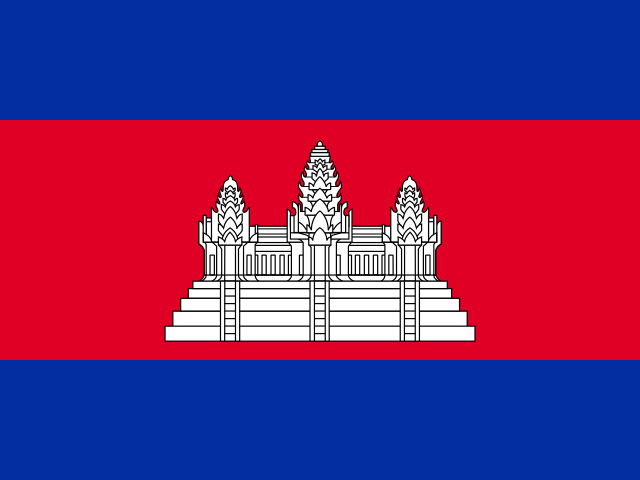 Cambodia
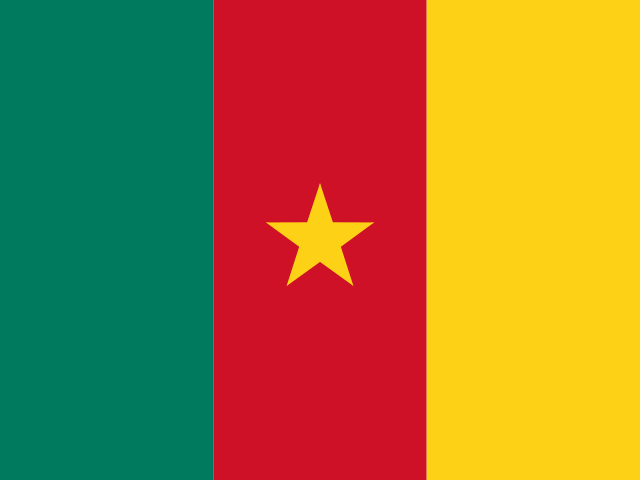 Cameroon
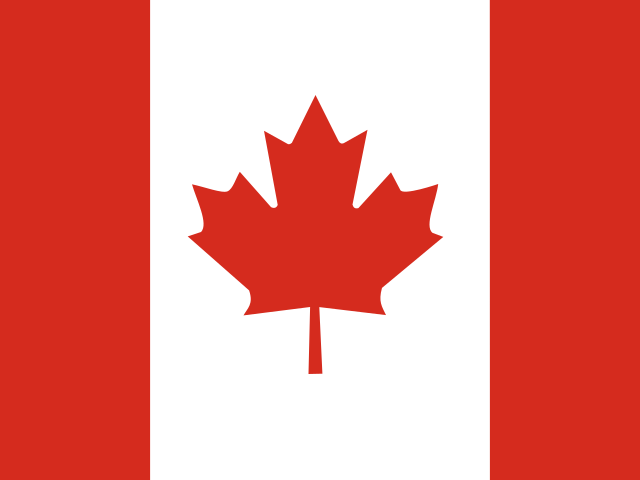 Canada
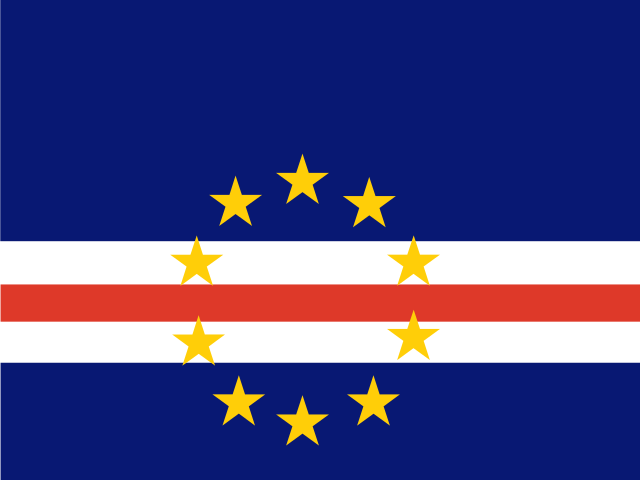 Cape Verde
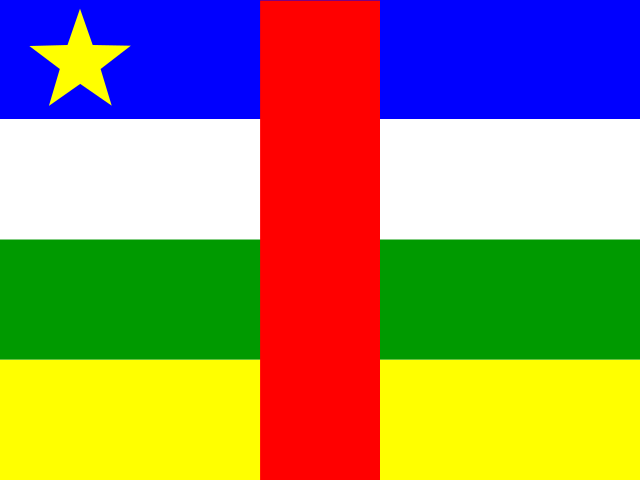 Central African Republic
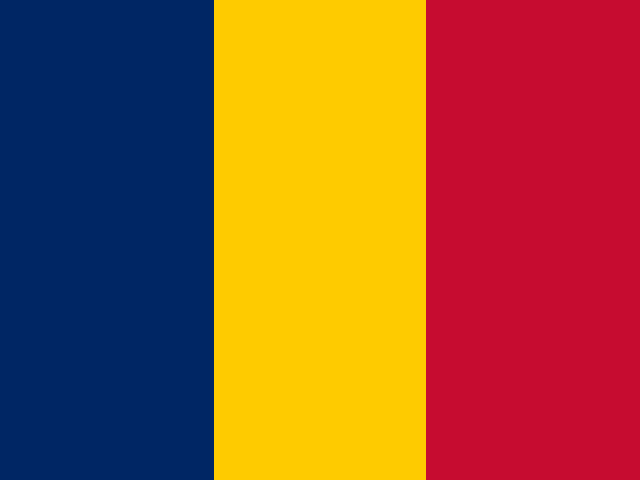 Chad
Chad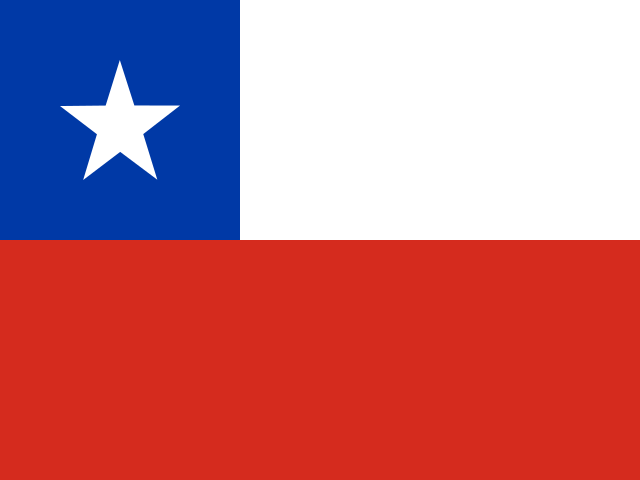 Chile
Chile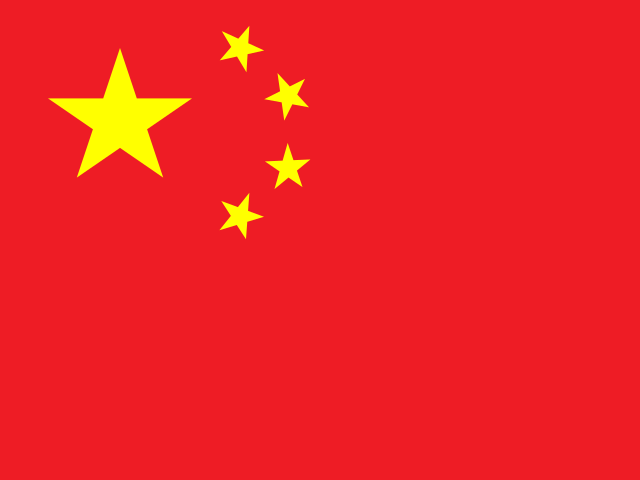 China
China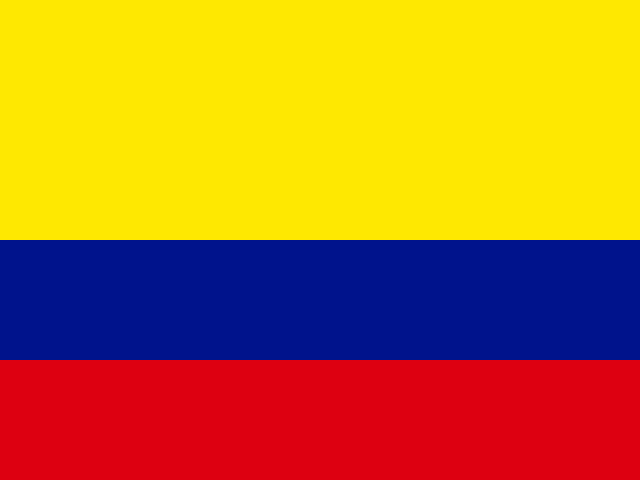 Colombia
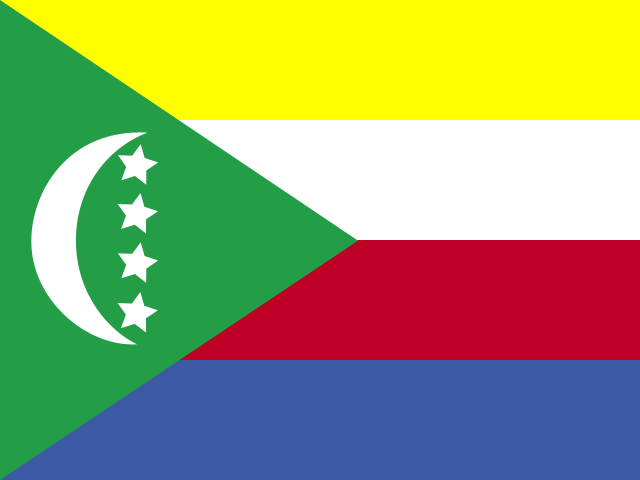 Comoros
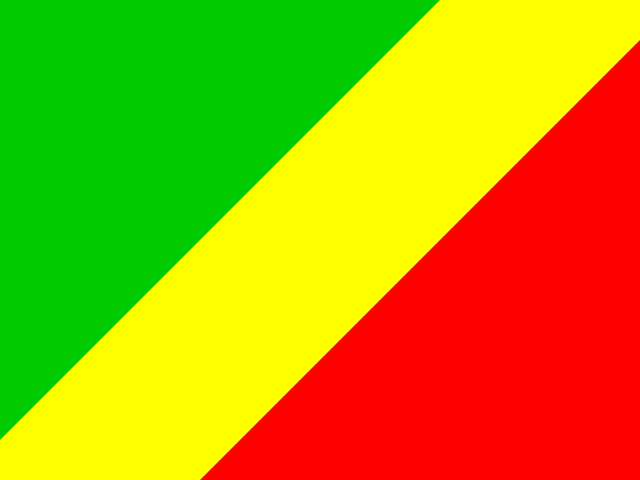 Congo
Congo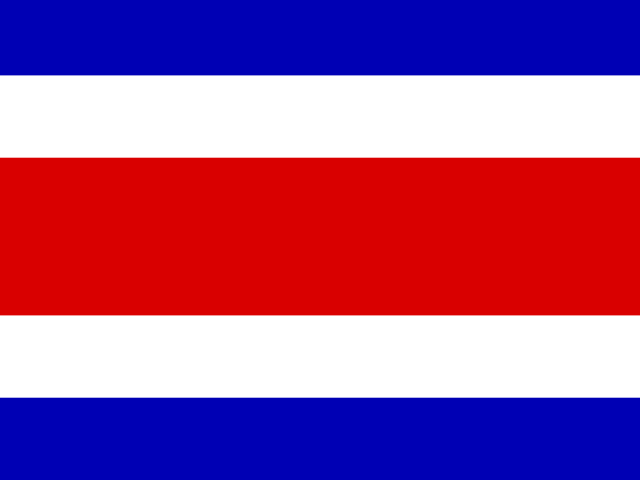 Costa Rica
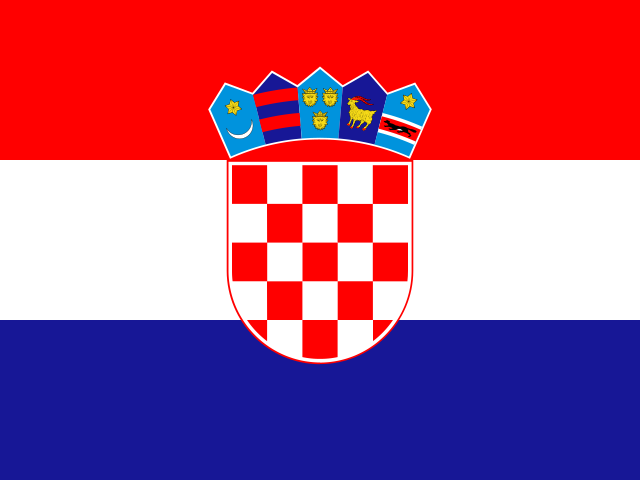 Croatia
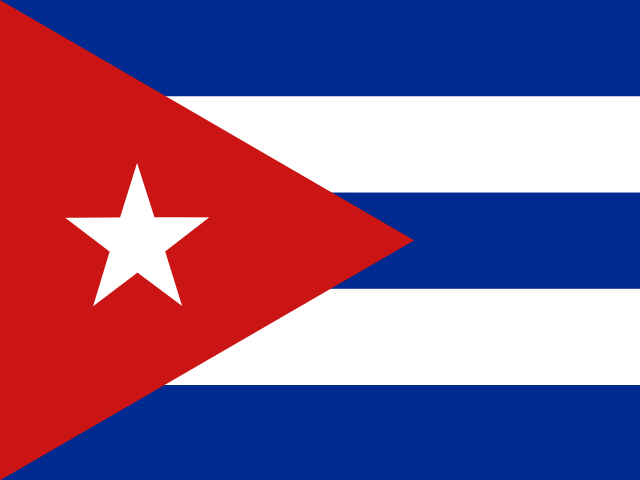 Cuba
Cuba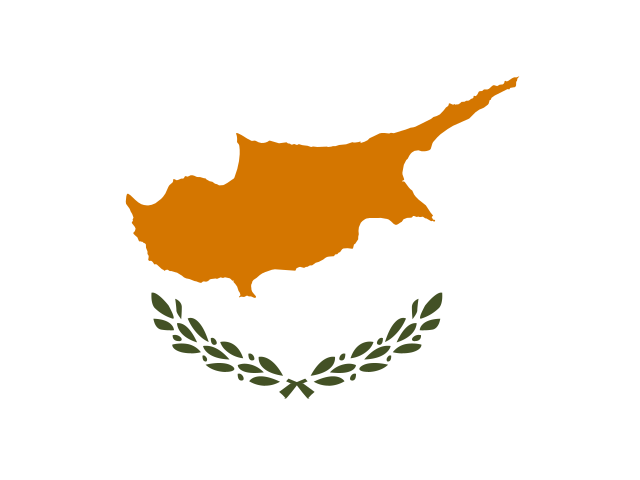 Cyprus
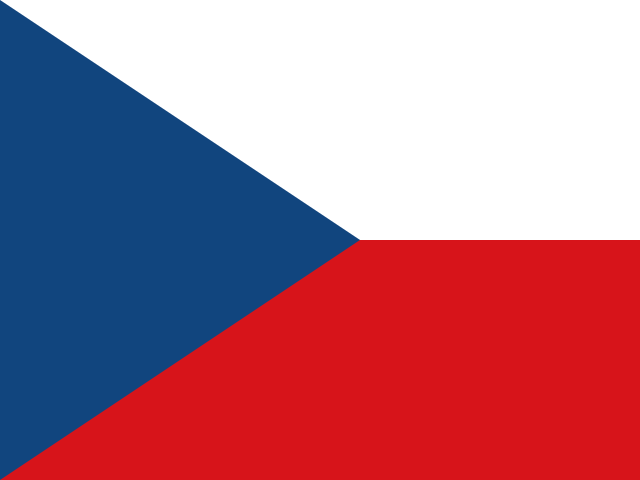 Czechia
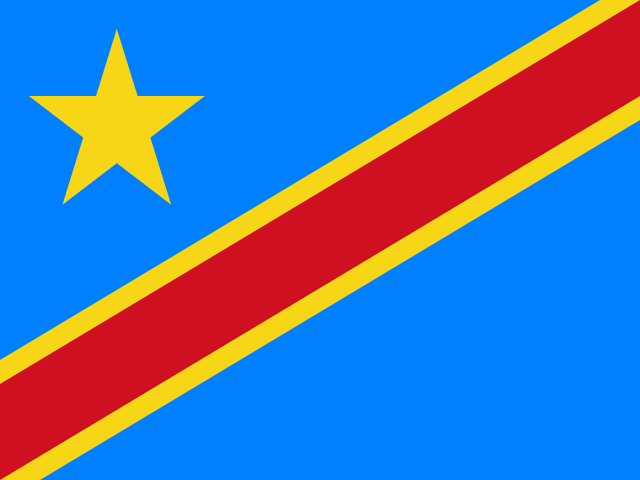 Democratic Republic of the Congo
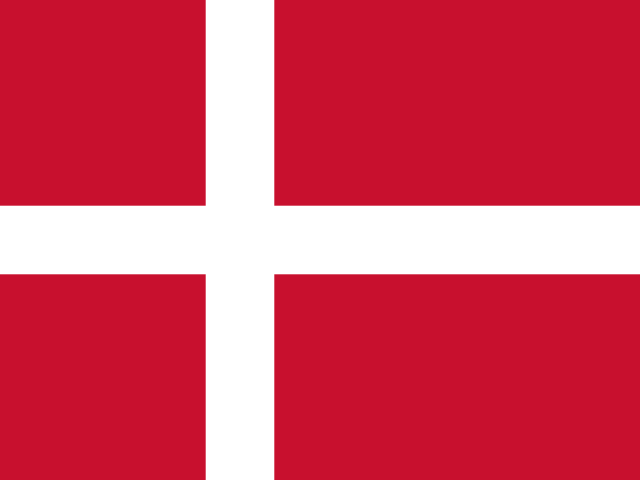 Denmark
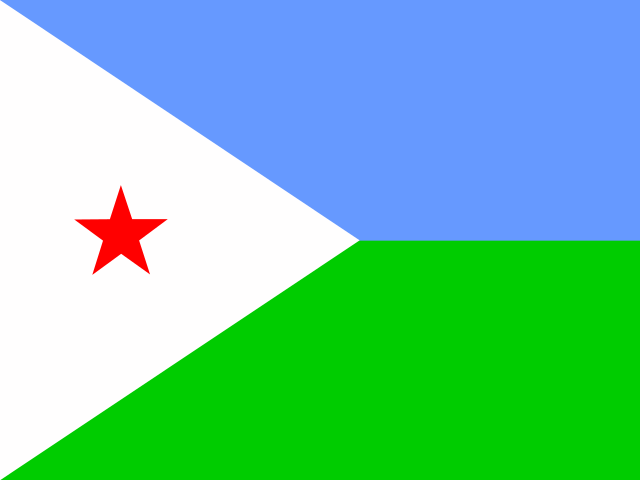 Djibouti
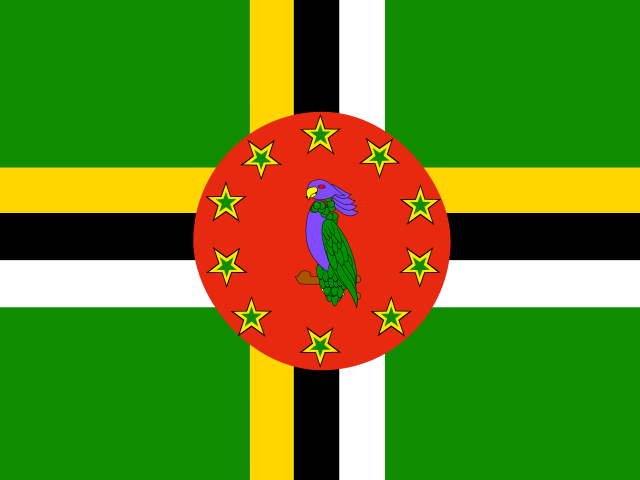 Dominica
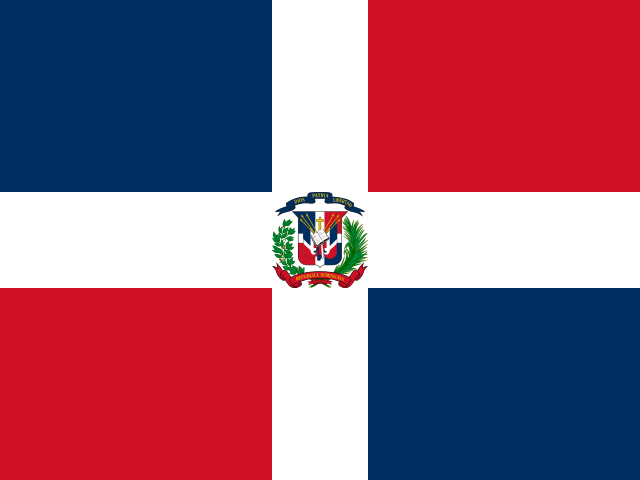 Dominican Republic
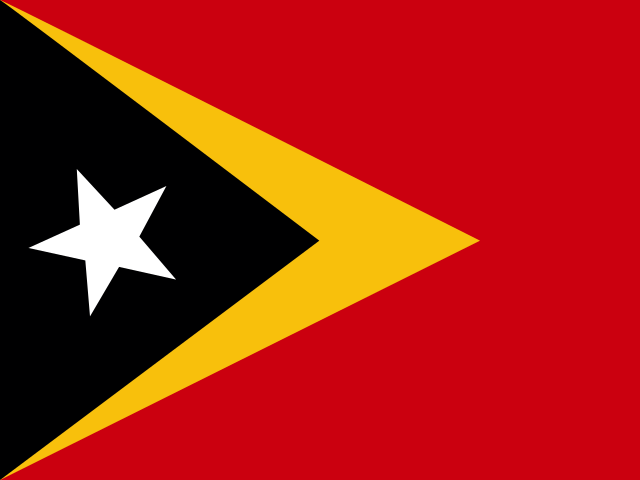 East Timor
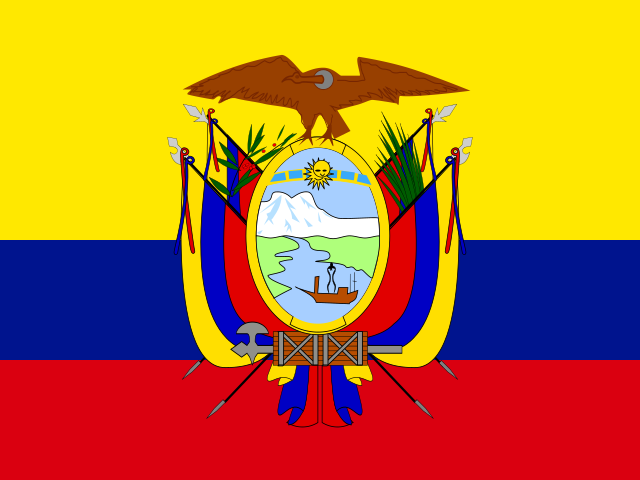 Ecuador
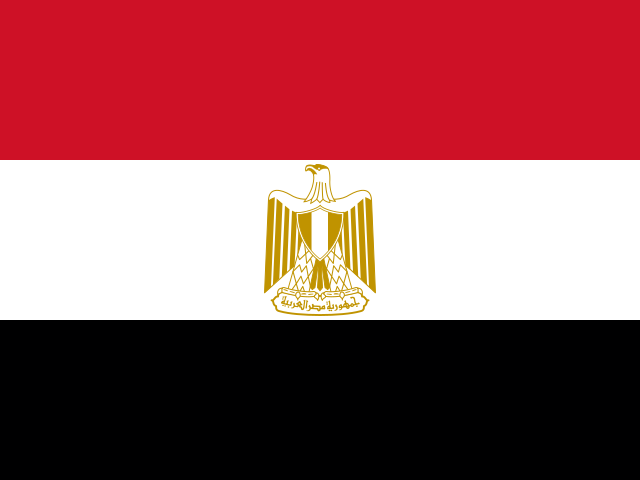 Egypt
Egypt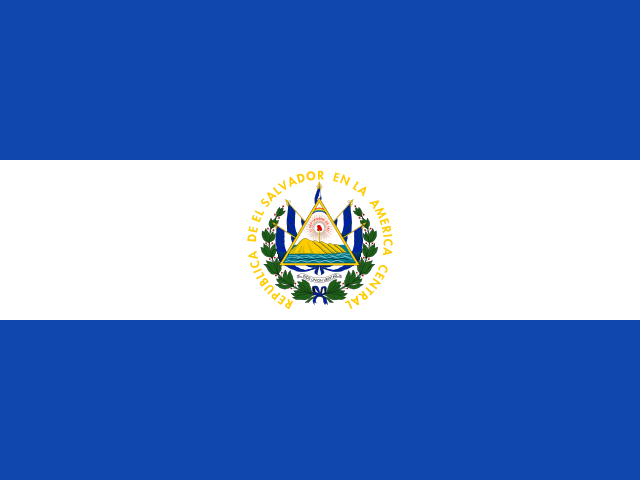 El Salvador
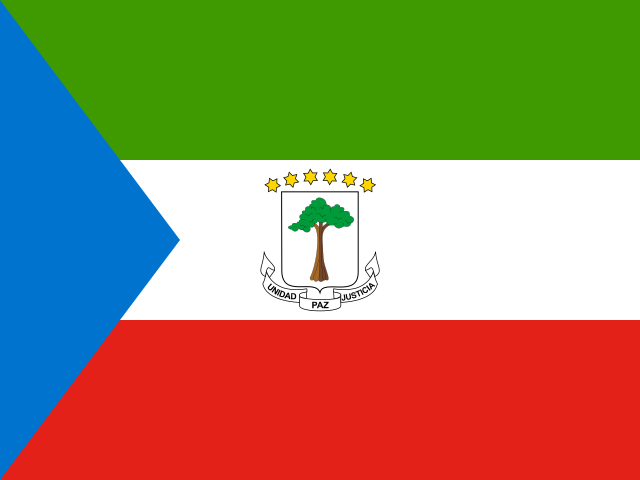 Equatorial Guinea
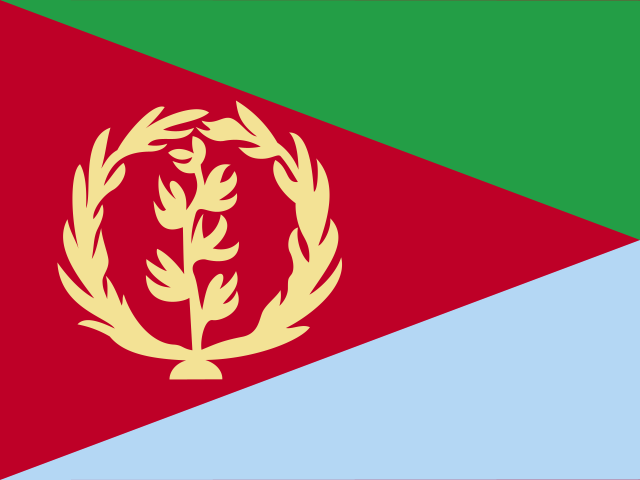 Eritrea
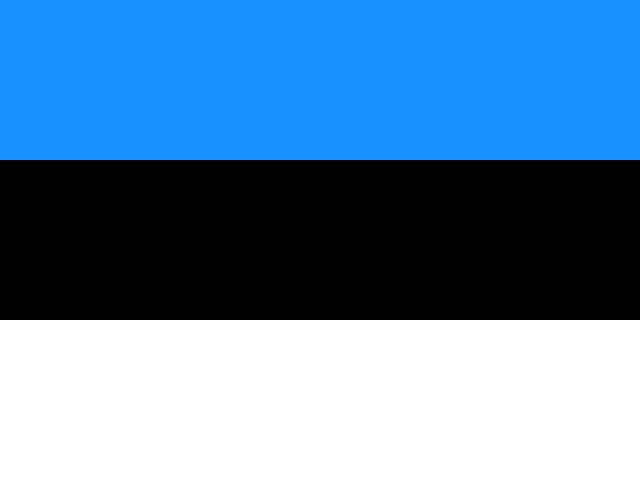 Estonia
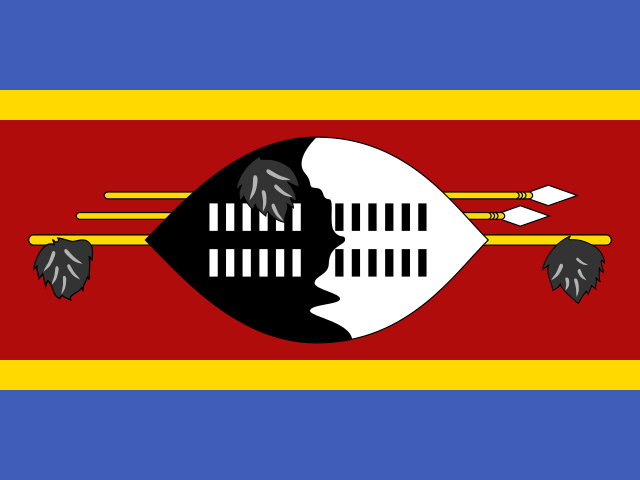 Eswatini
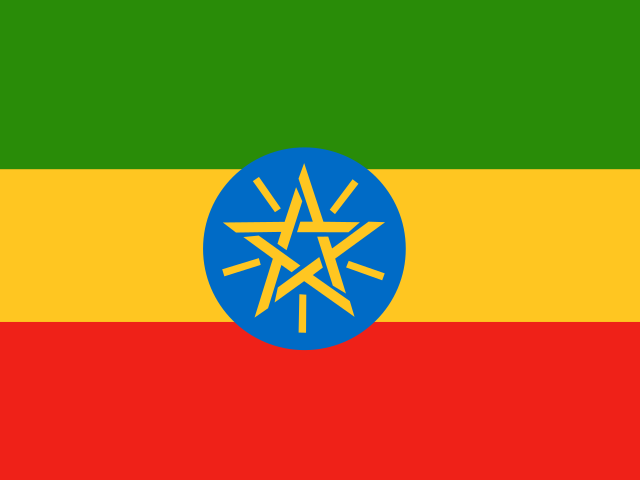 Ethiopia
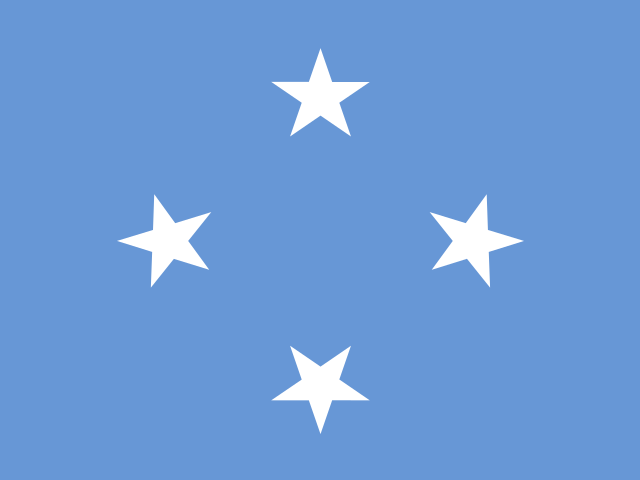 Federated States of Micronesia
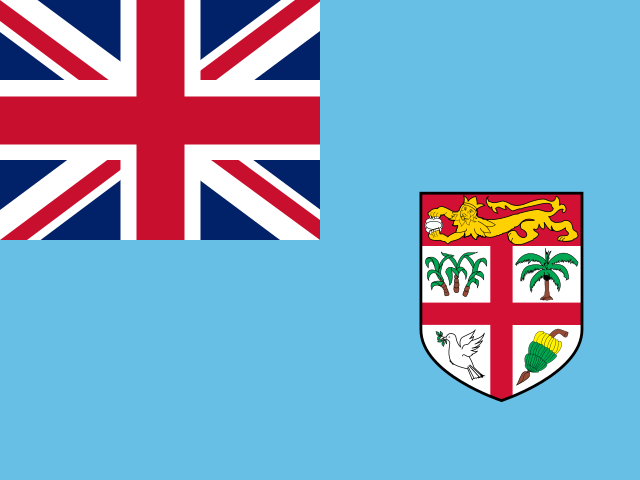 Fiji
Fiji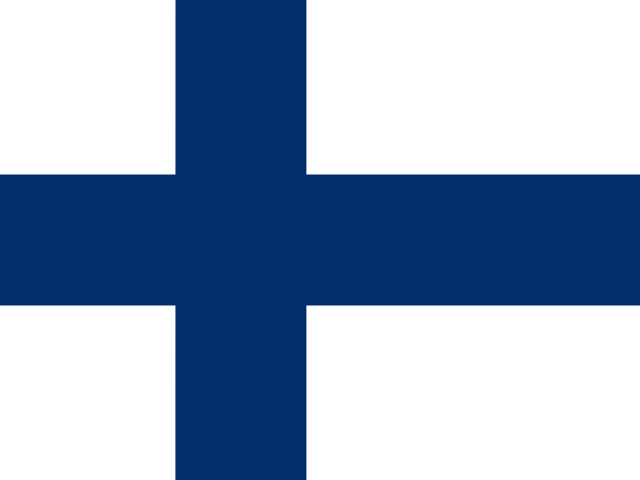 Finland
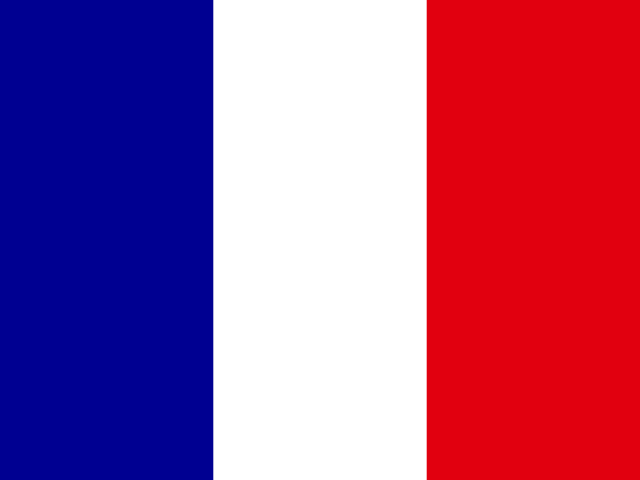 France
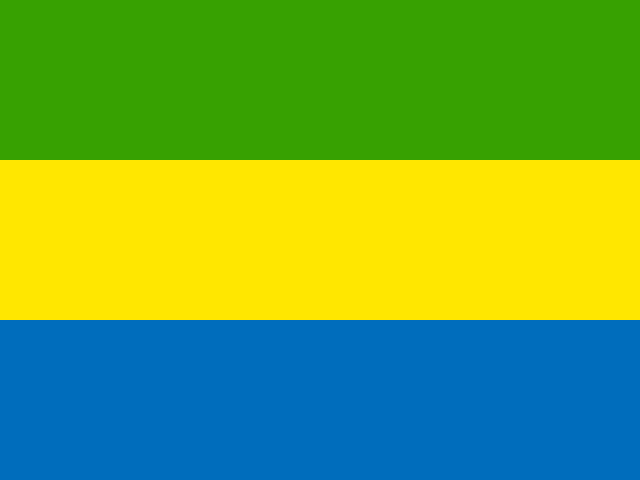 Gabon
Gabon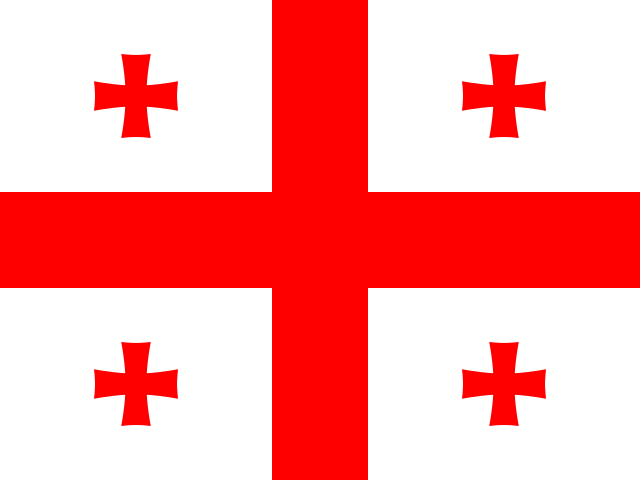 Georgia
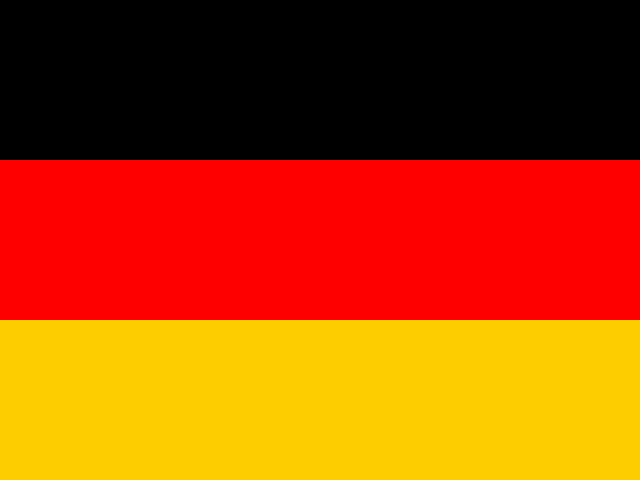 Germany
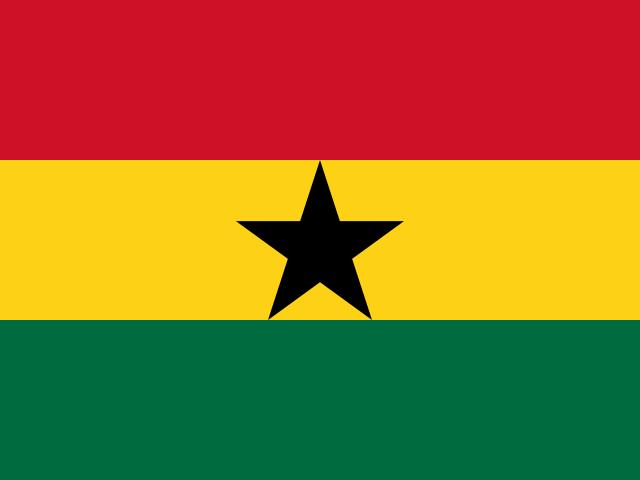 Ghana
Ghana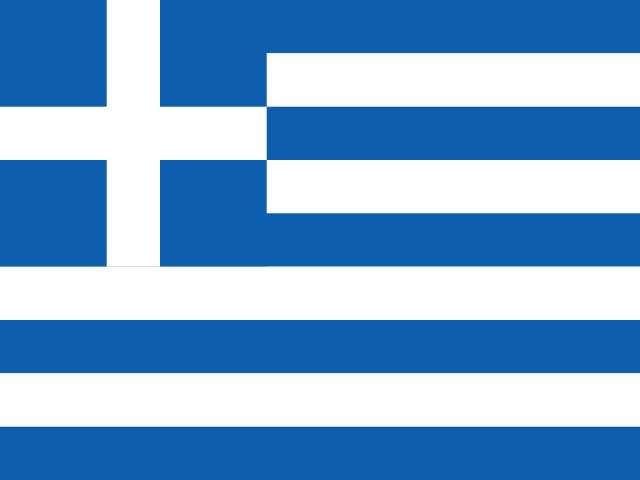 Greece
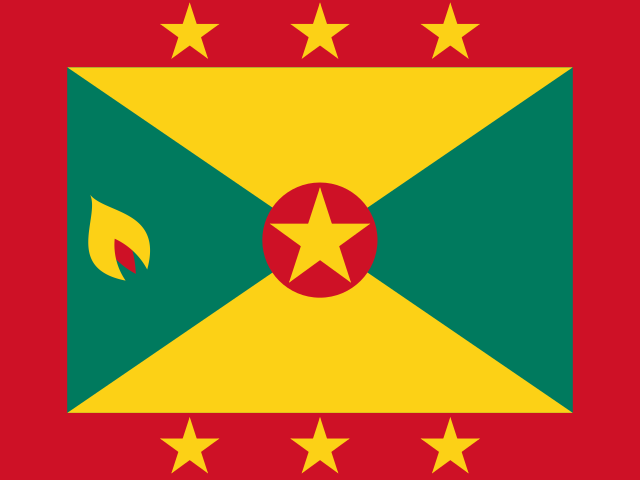 Grenada
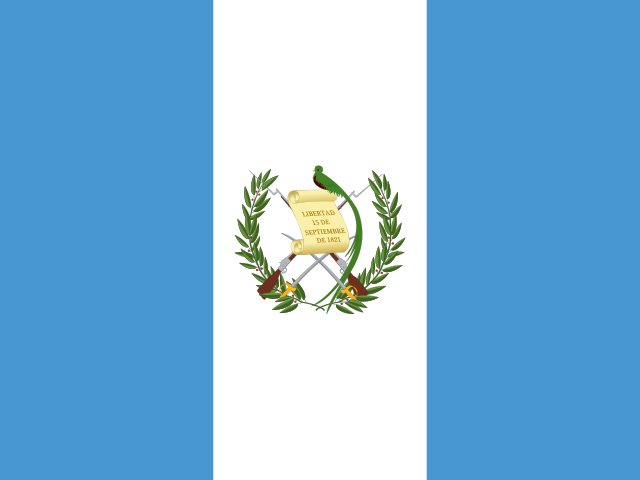 Guatemala
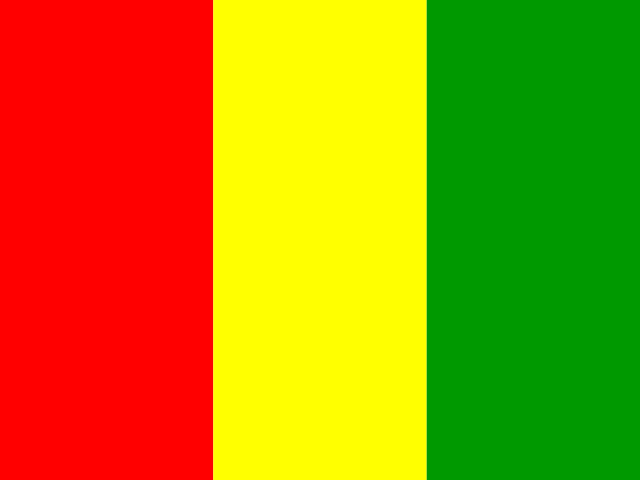 Guinea
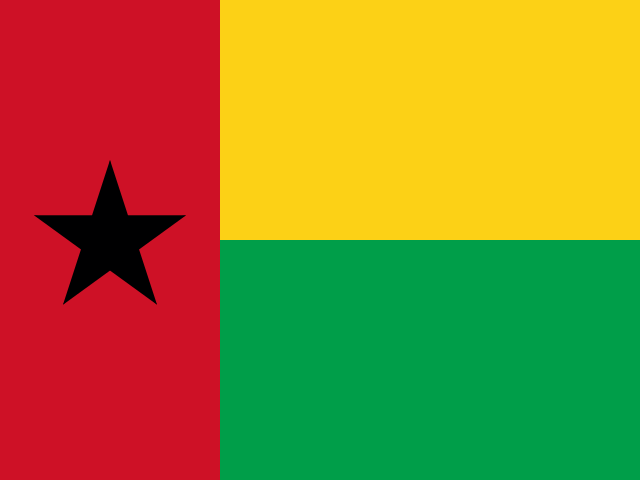 Guinea-Bissau
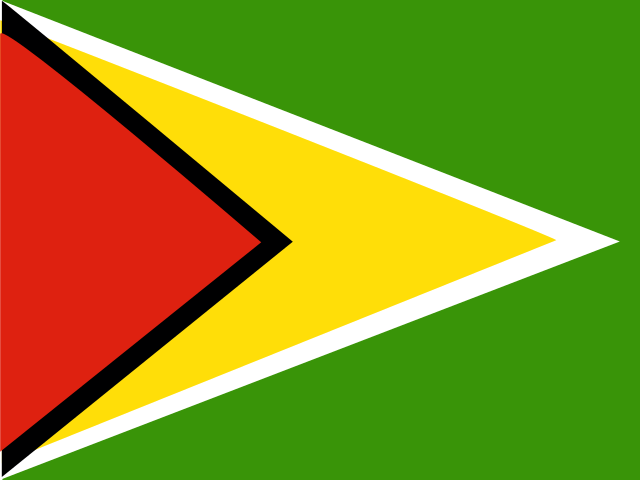 Guyana
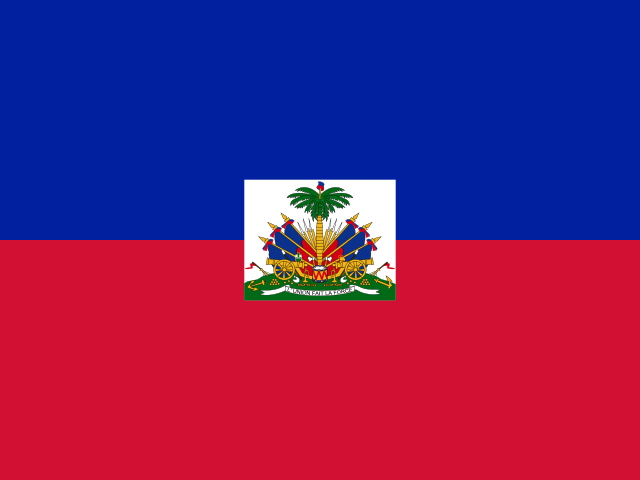 Haiti
Haiti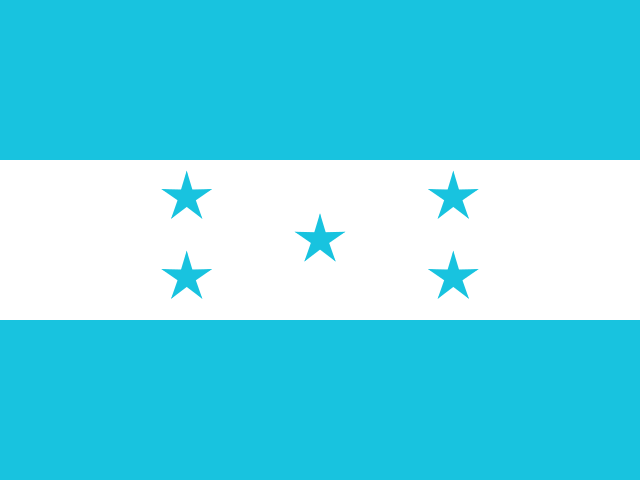 Honduras
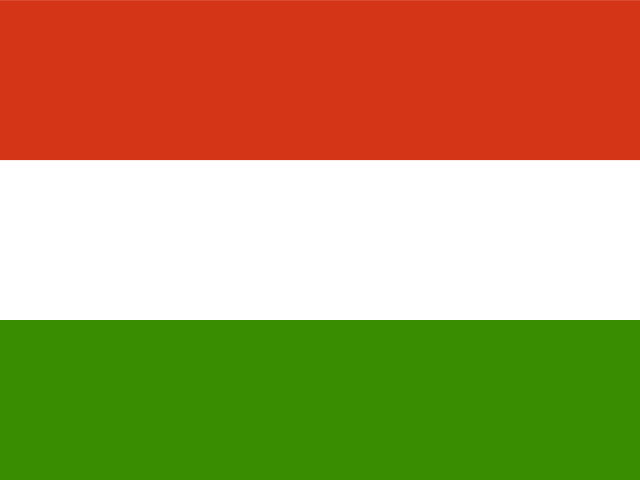 Hungary
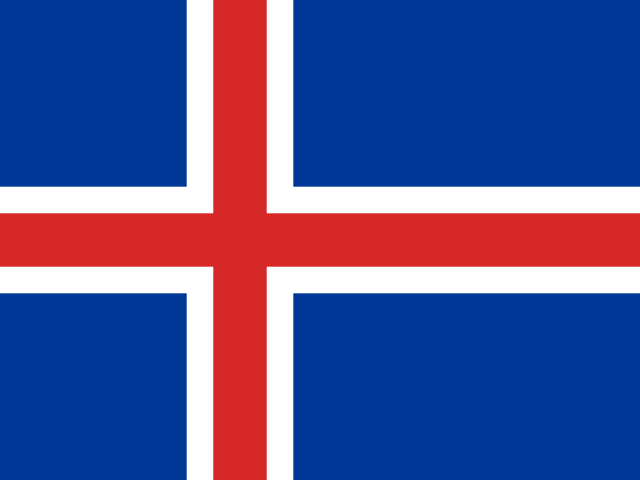 Iceland
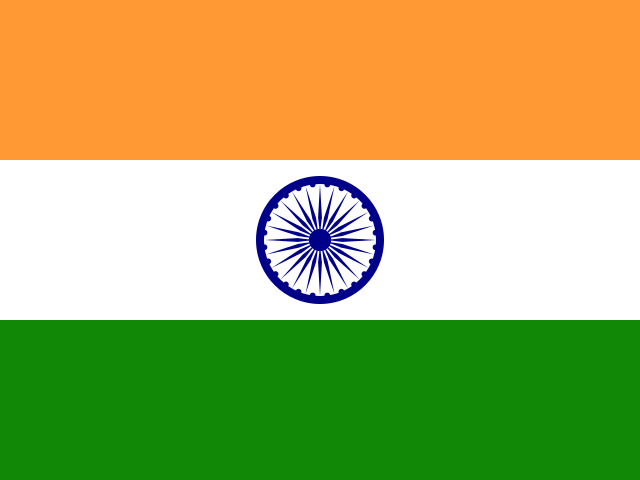 India
India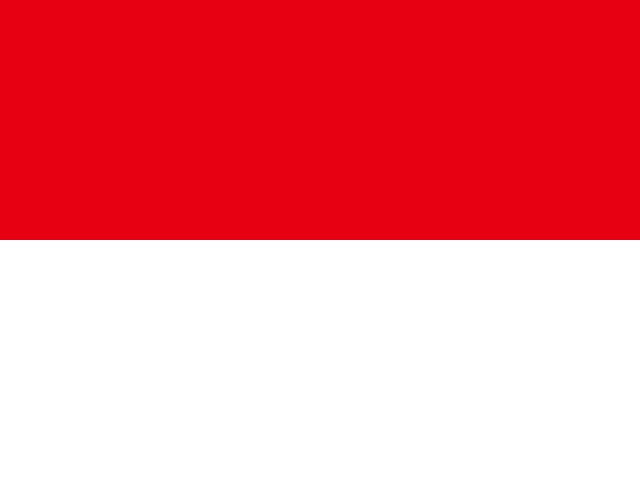 Indonesia
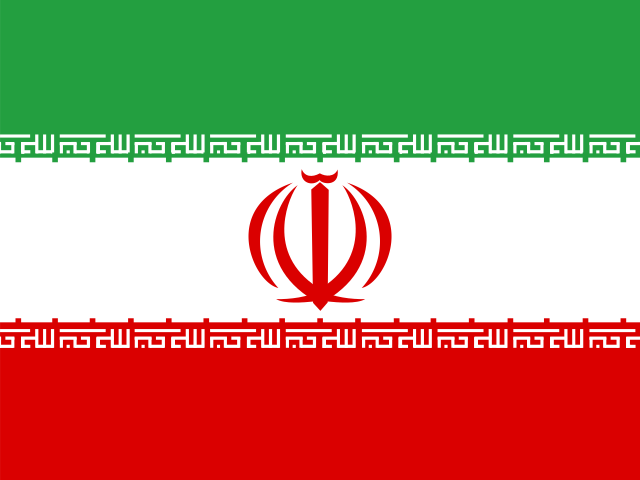 Iran
Iran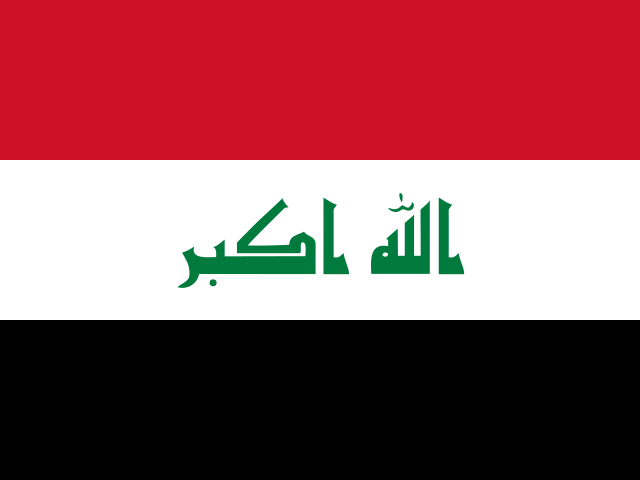 Iraq
Iraq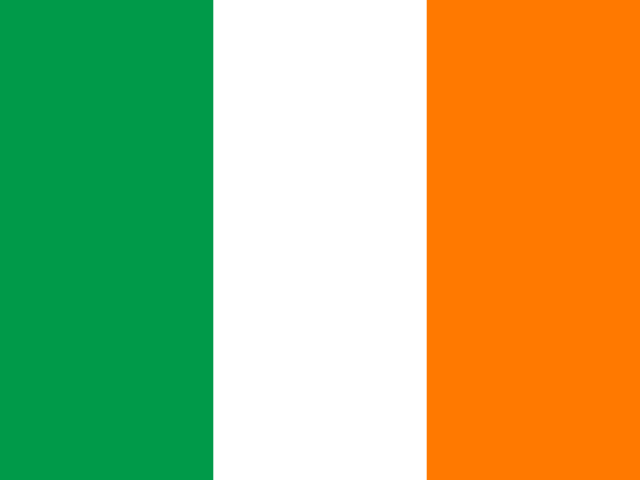 Ireland
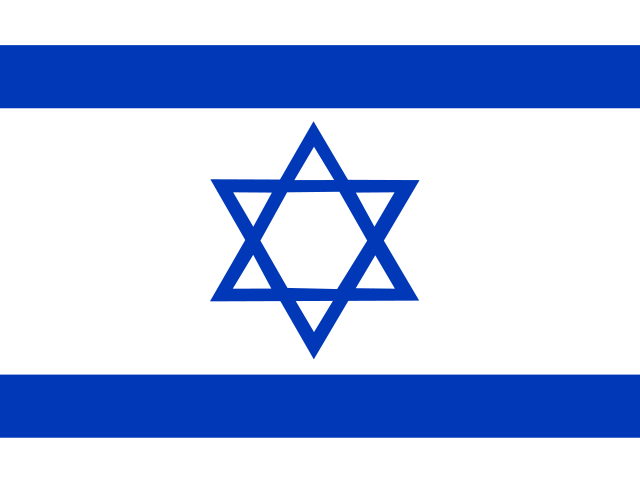 Israel
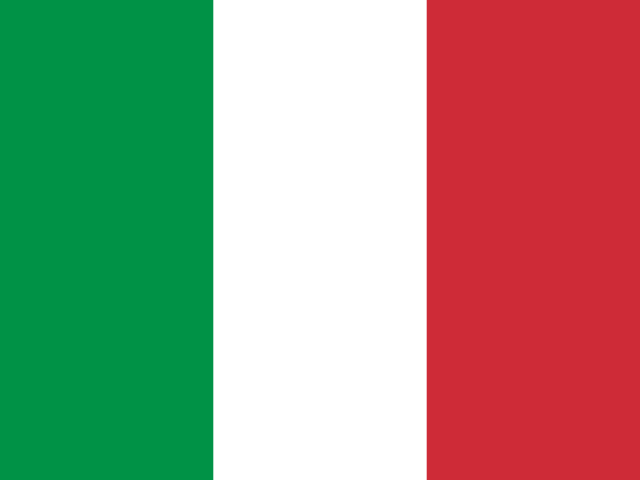 Italy
Italy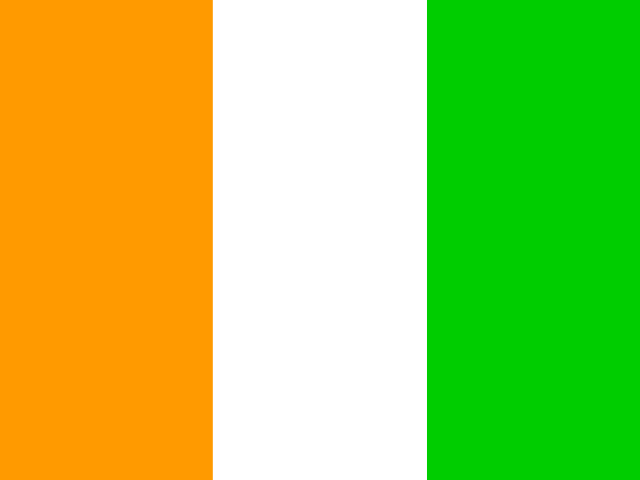 Ivory Coast
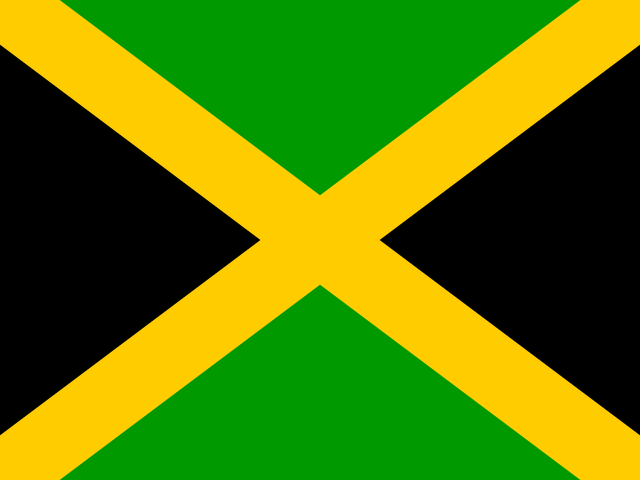 Jamaica
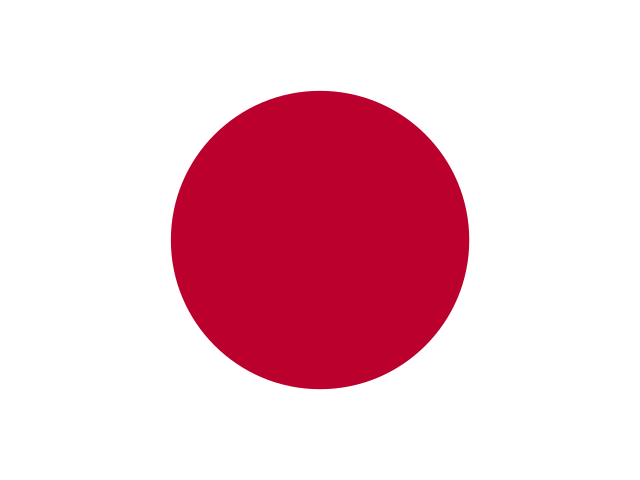 Japan
Japan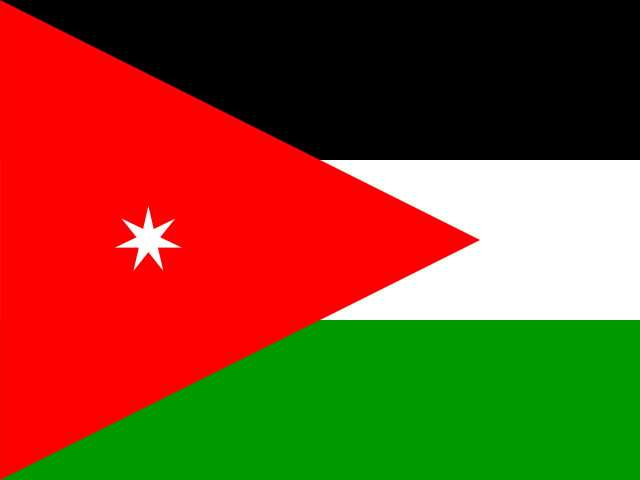 Jordan
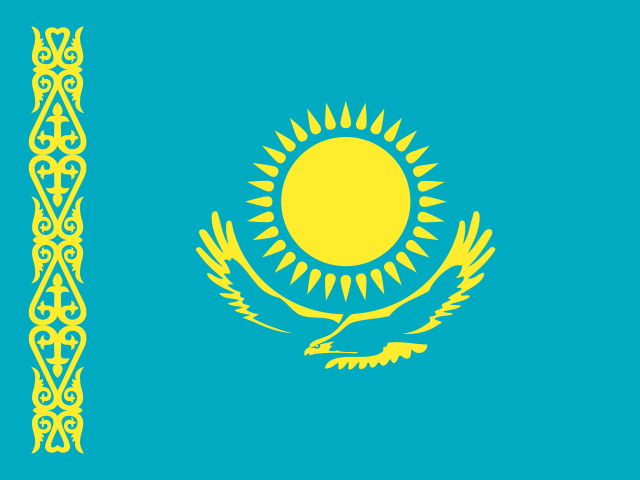 Kazakhstan
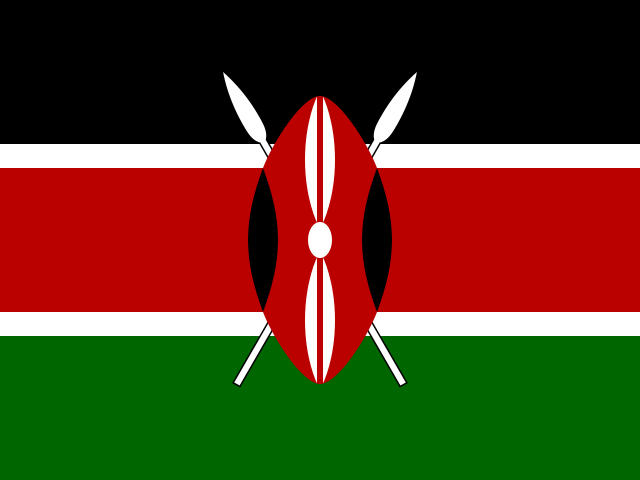 Kenya
Kenya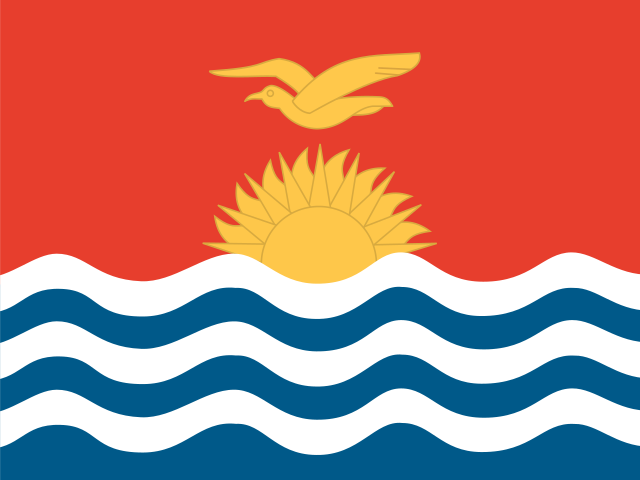 Kiribati
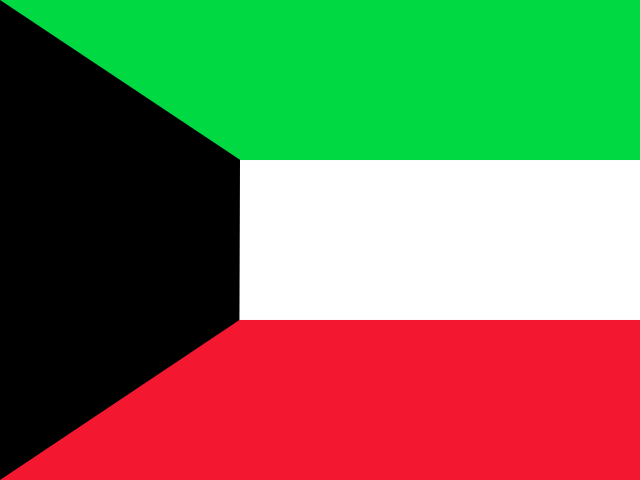 Kuwait
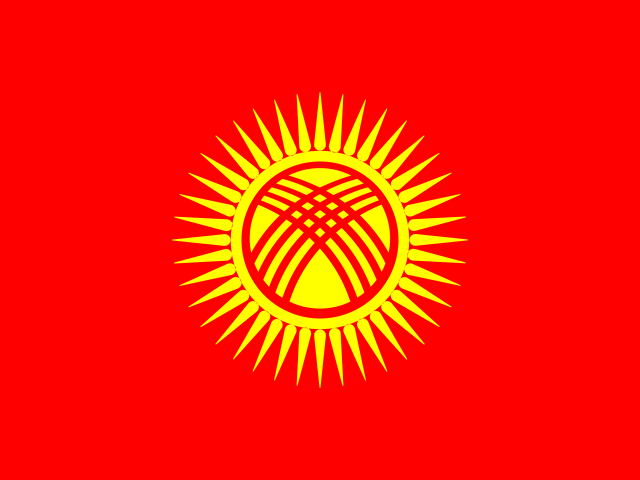 Kyrgyzstan
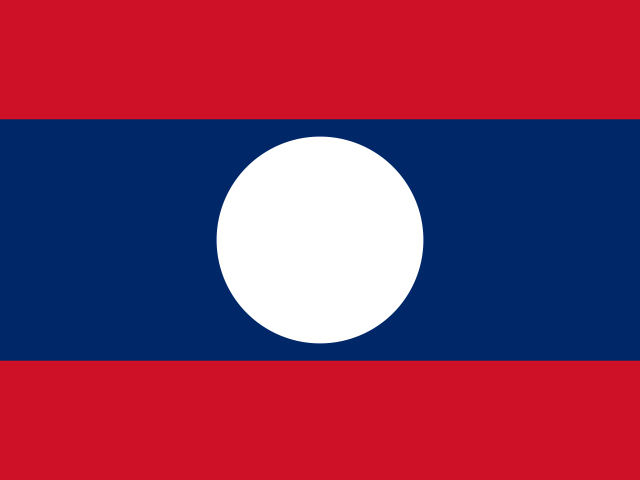 Laos
Laos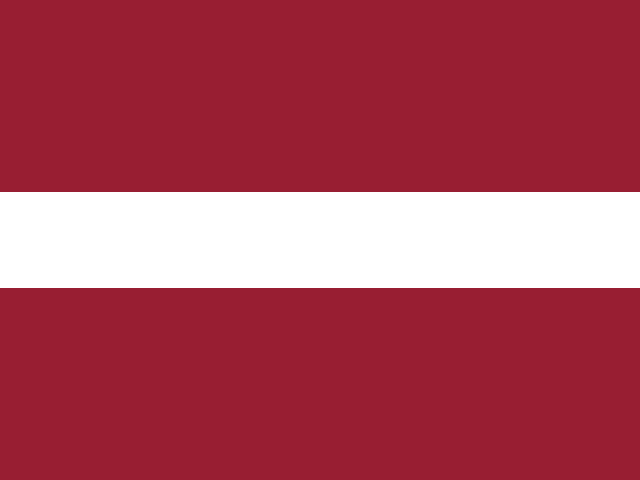 Latvia
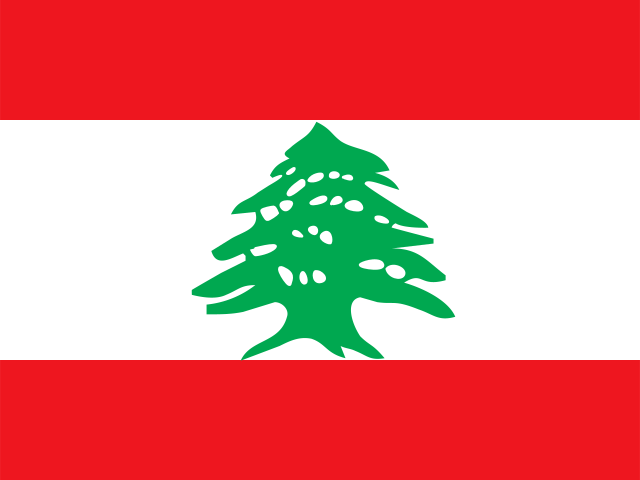 Lebanon
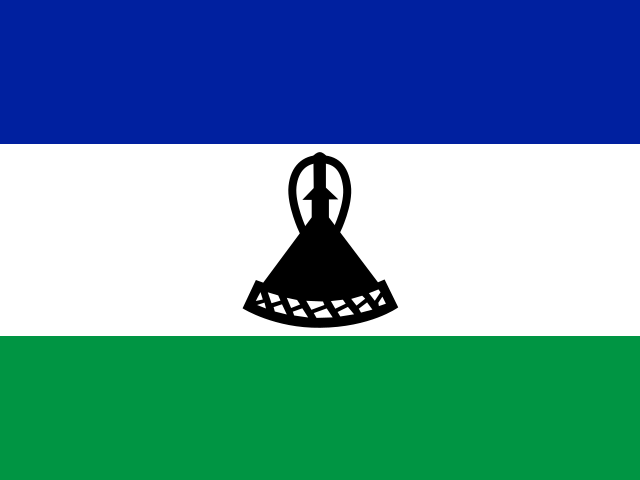 Lesotho
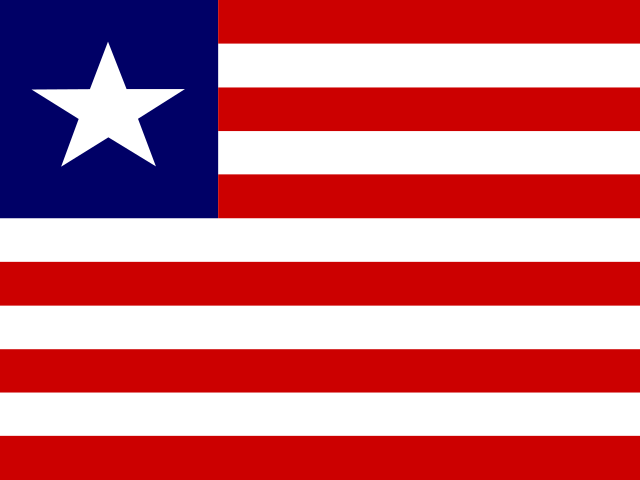 Liberia
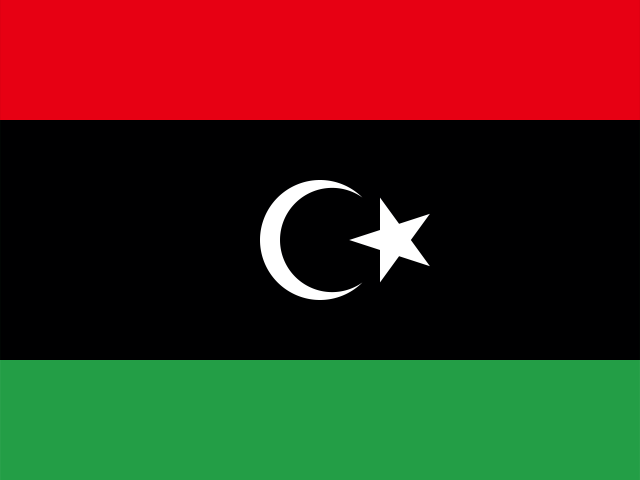 Libya
Libya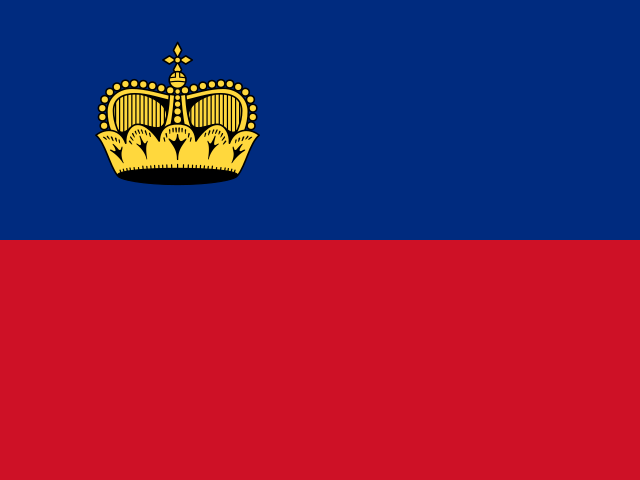 Liechtenstein
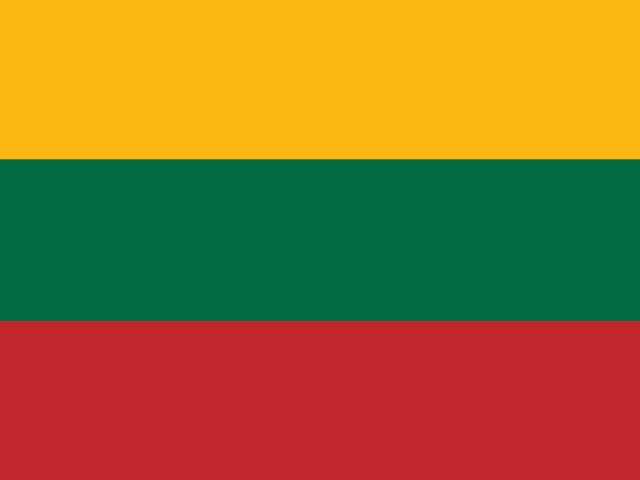 Lithuania
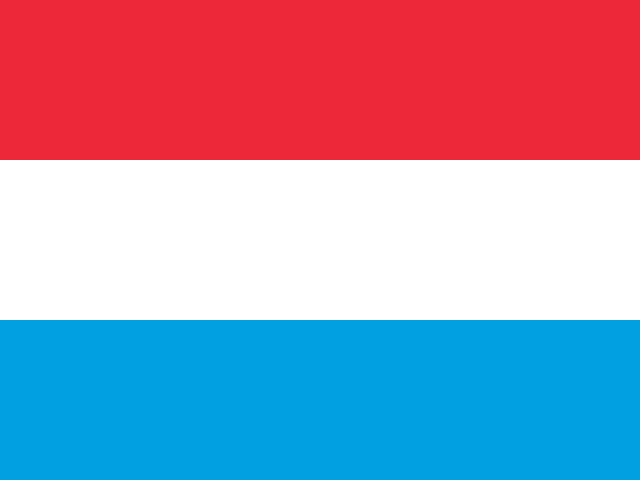 Luxembourg
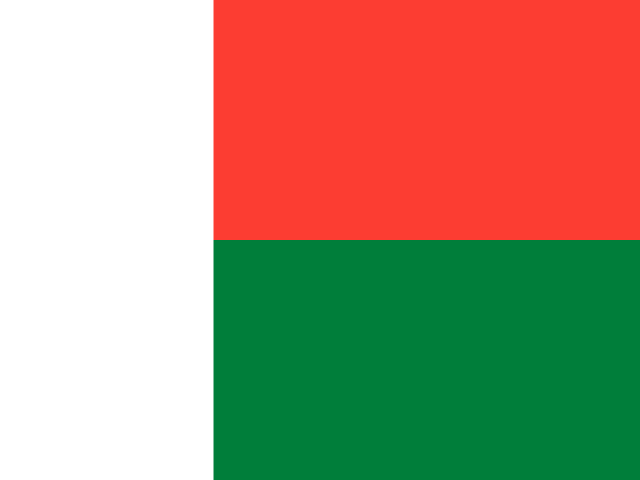 Madagascar
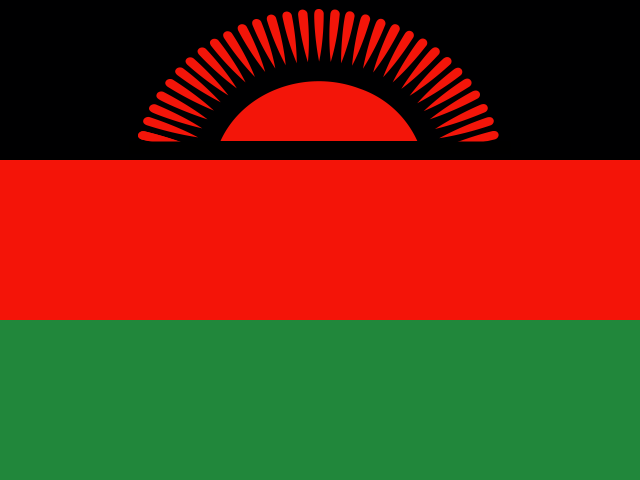 Malawi
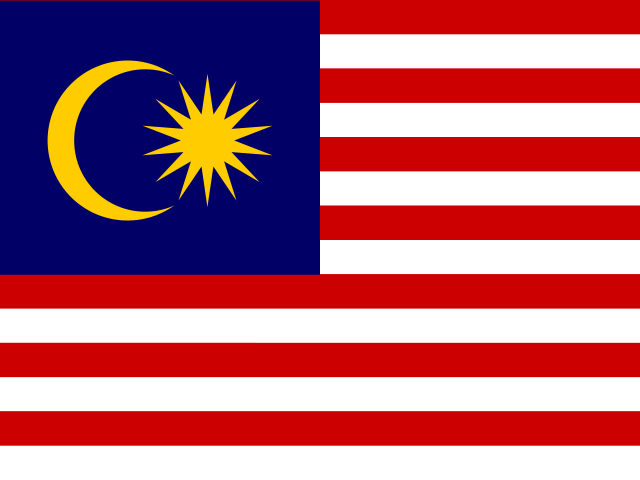 Malaysia
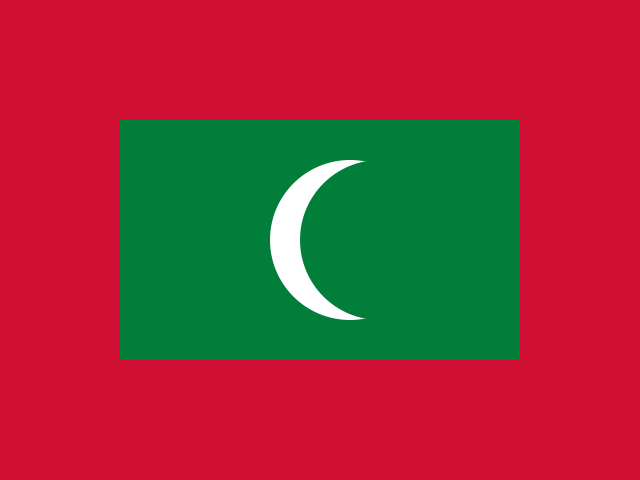 Maldives
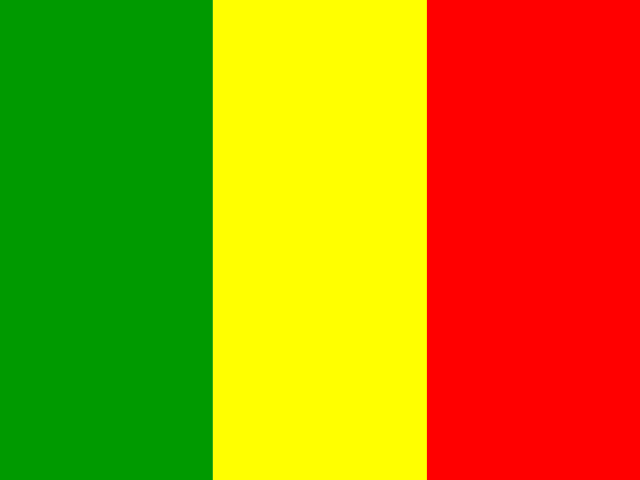 Mali
Mali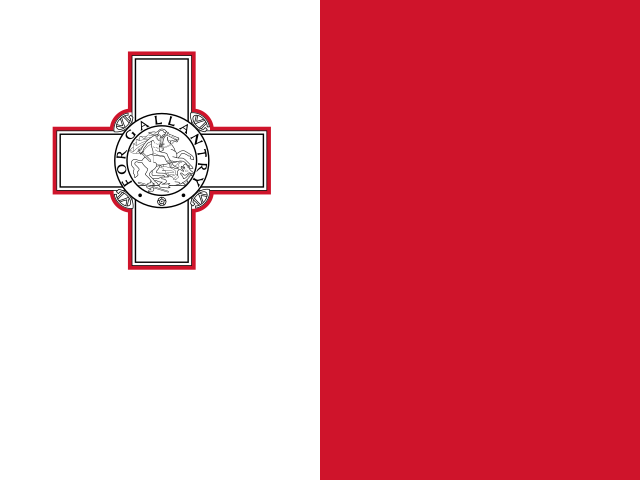 Malta
Malta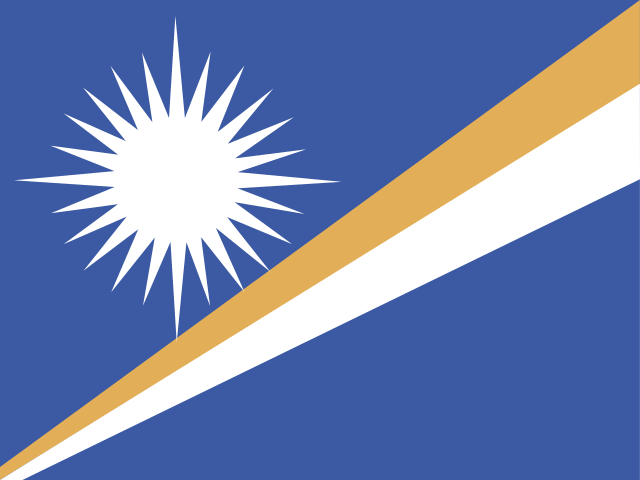 Marshall Islands
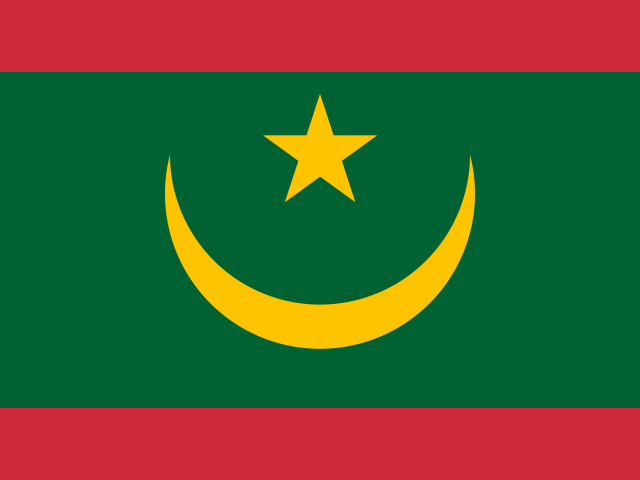 Mauritania
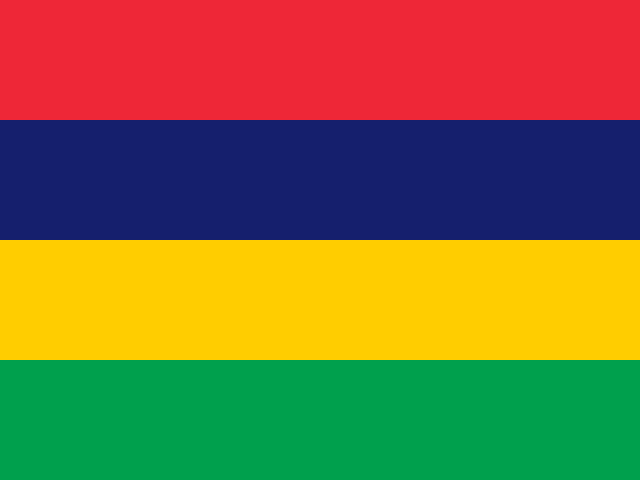 Mauritius
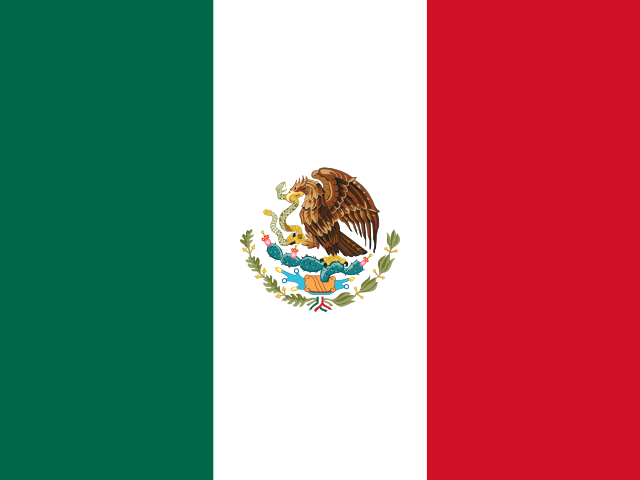 Mexico
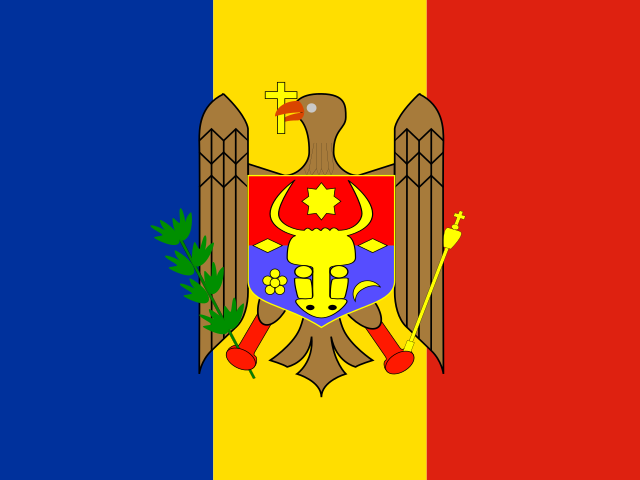 Moldova
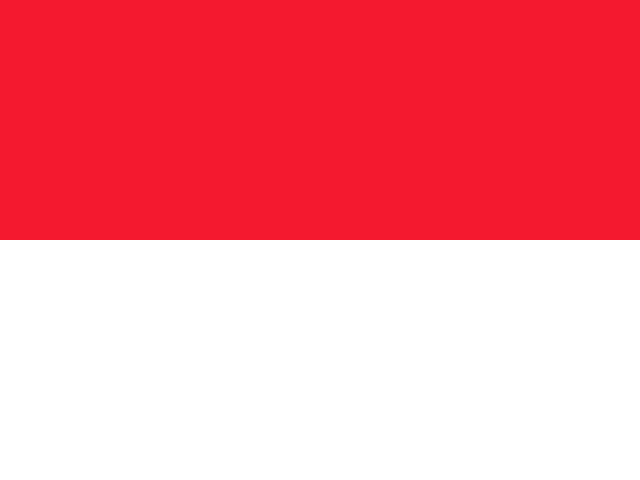 Monaco
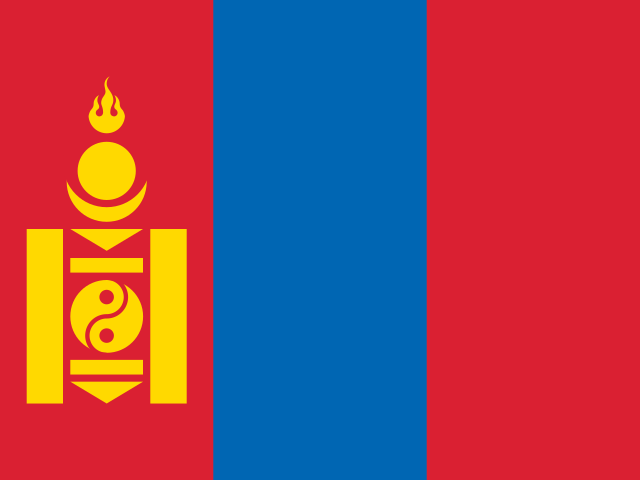 Mongolia
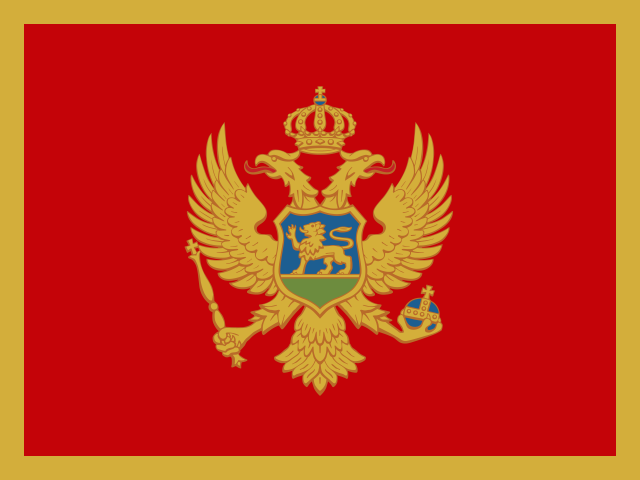 Montenegro
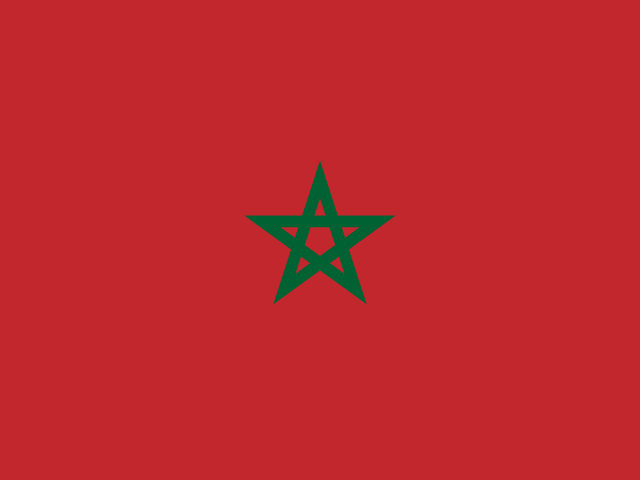 Morocco
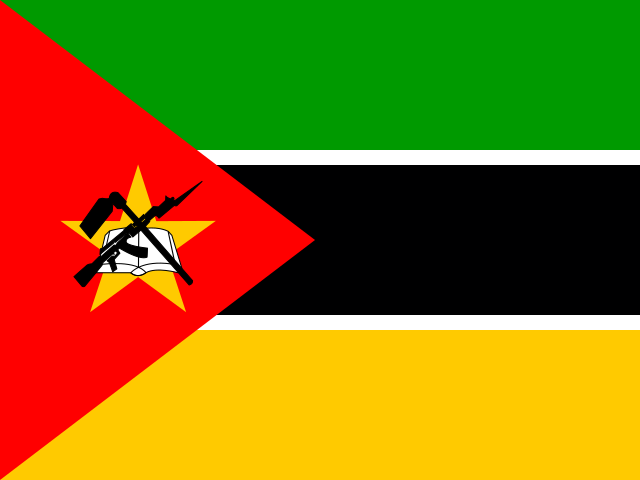 Mozambique
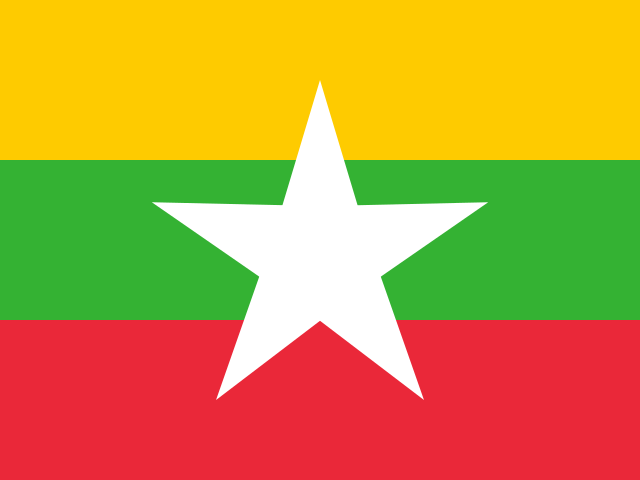 Myanmar (Burma)
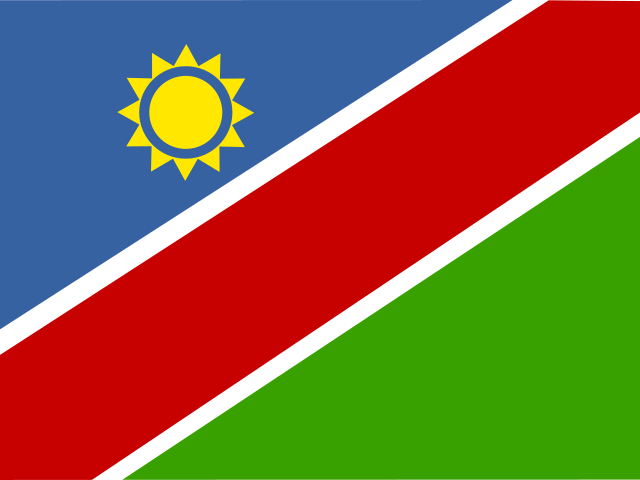 Namibia
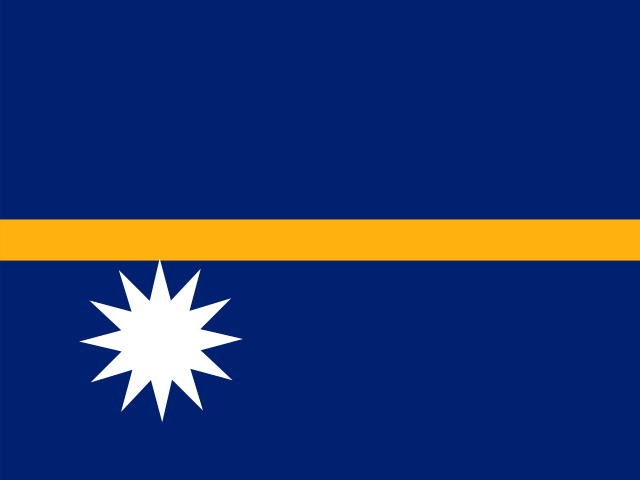 Naoero
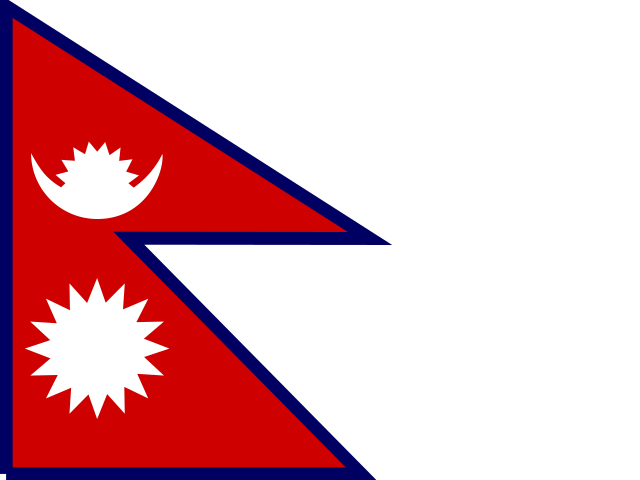 Nepal
Nepal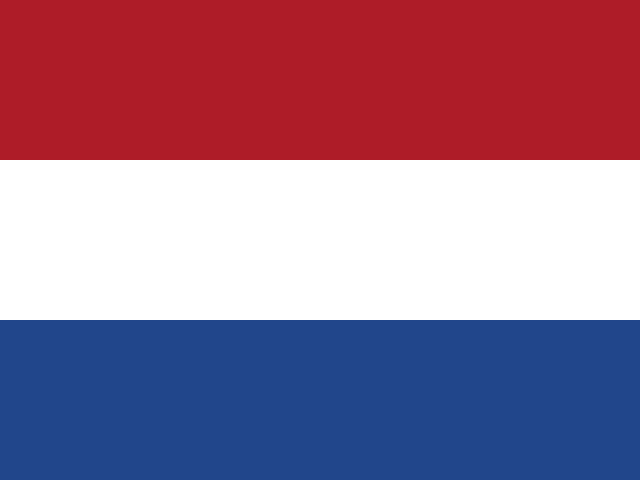 Netherlands
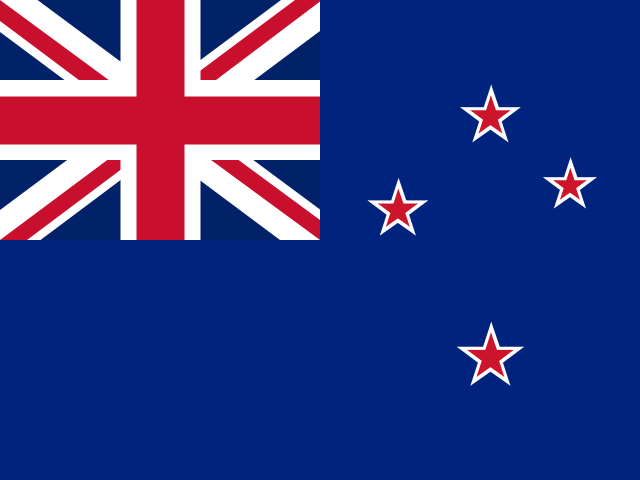 New Zealand
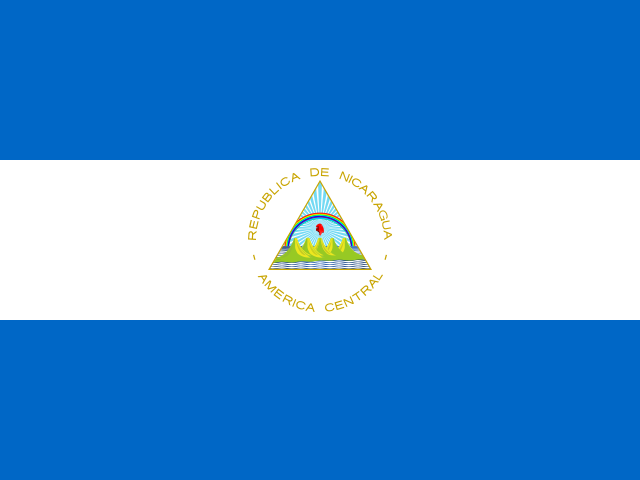 Nicaragua
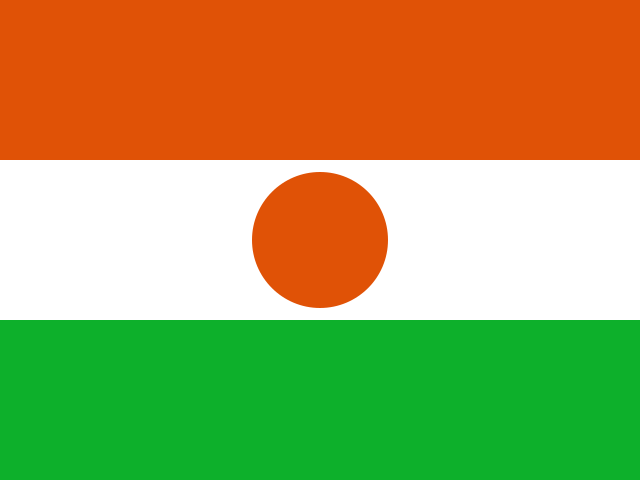 Niger
Niger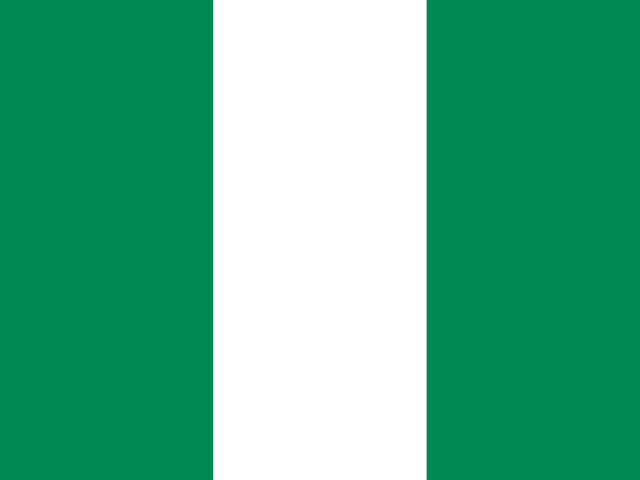 Nigeria
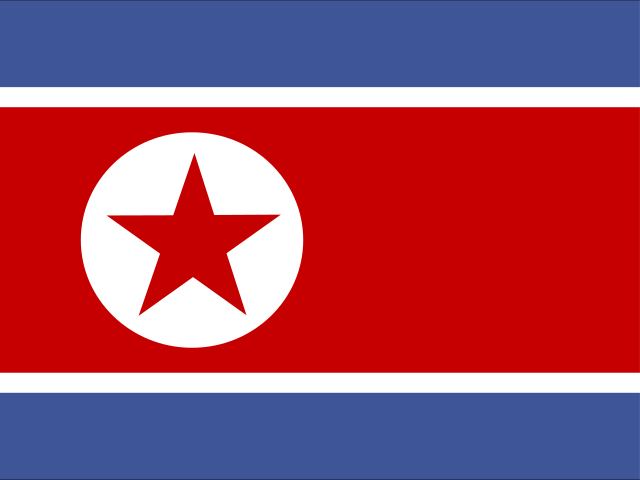 North Korea
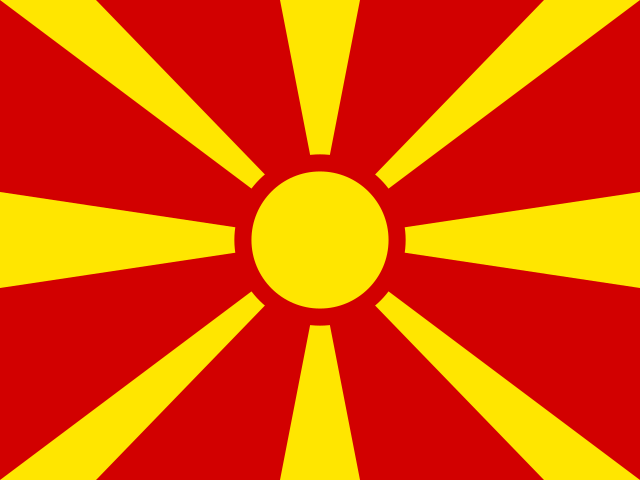 North Macedonia
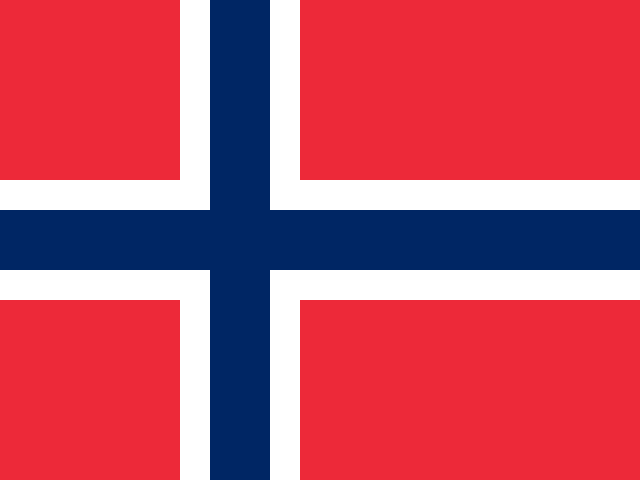 Norway
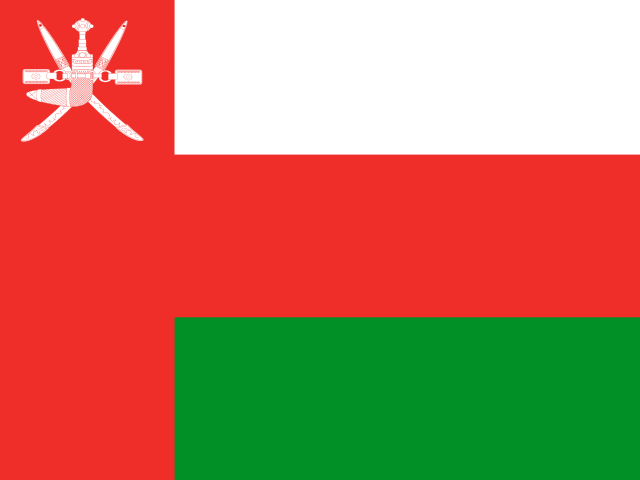 Oman
Oman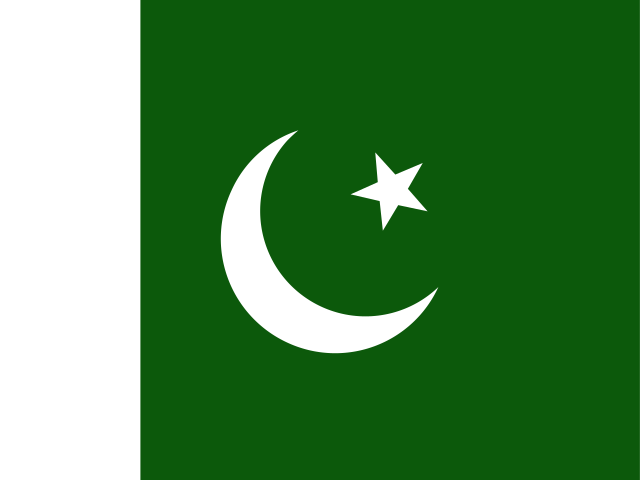 Pakistan
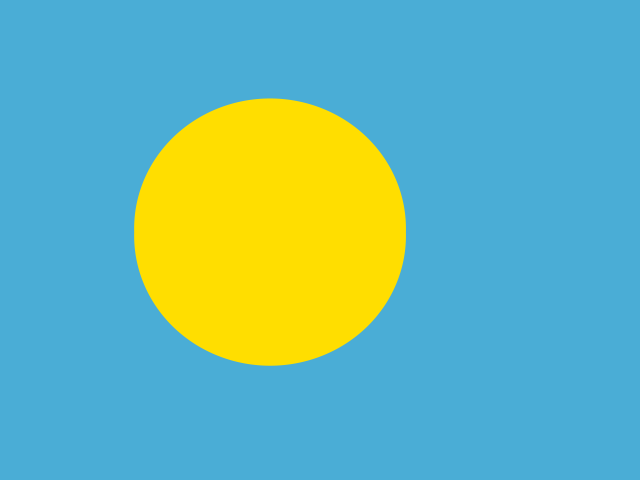 Palau
Palau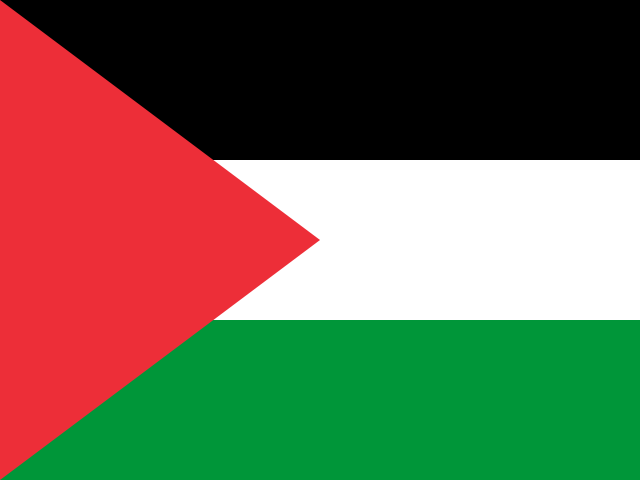 Palestine
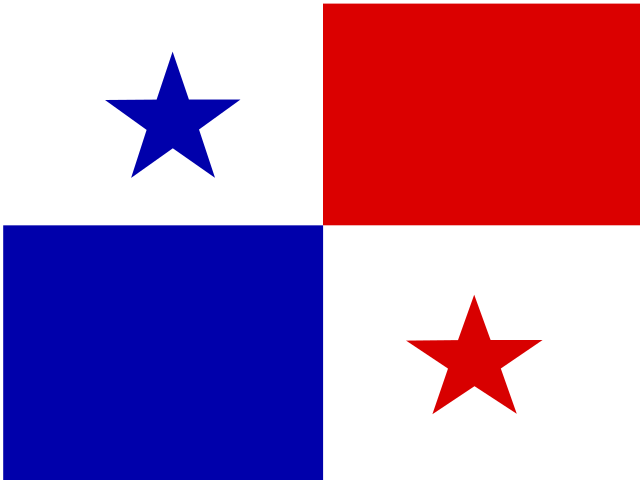 Panama
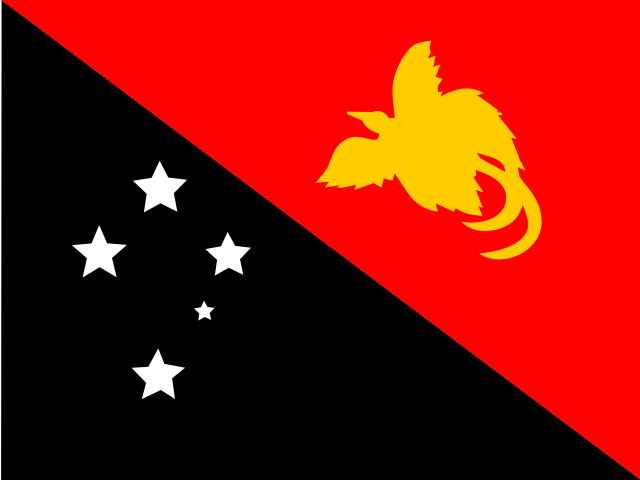 Papua New Guinea
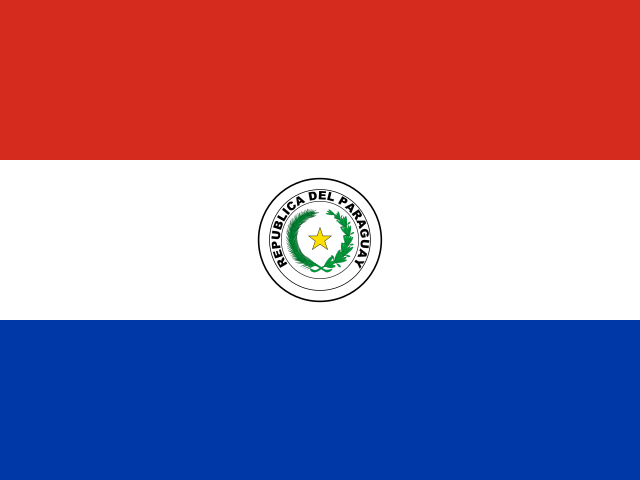 Paraguay
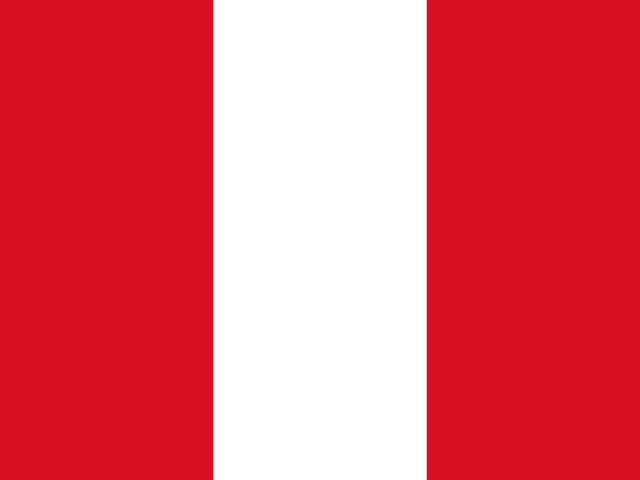 Peru
Peru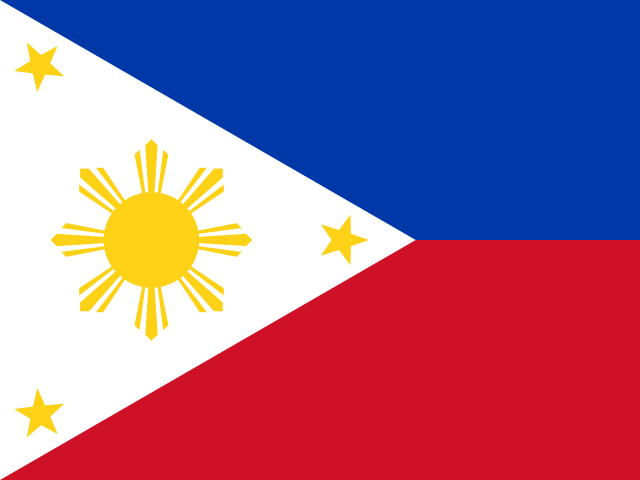 Philippines
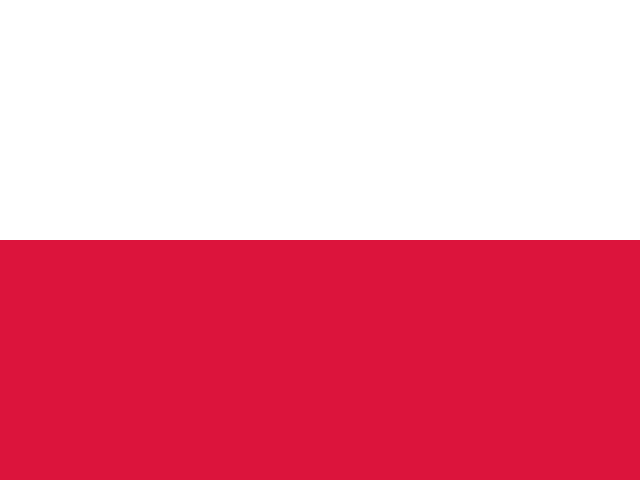 Poland
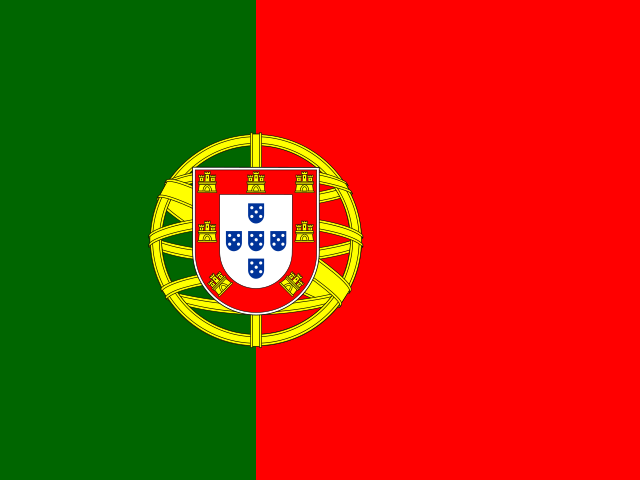 Portugal
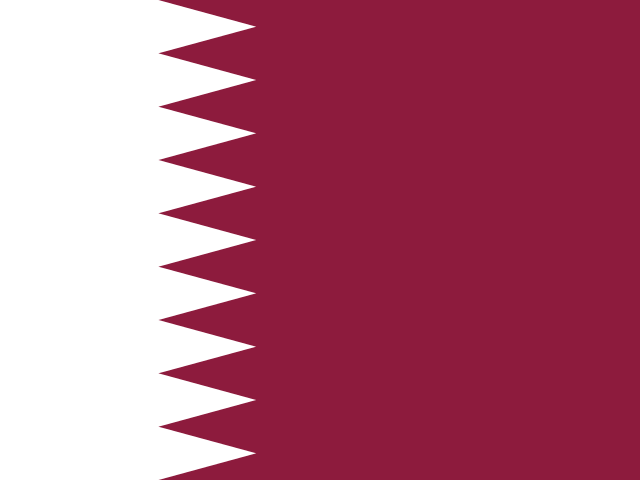 Qatar
Qatar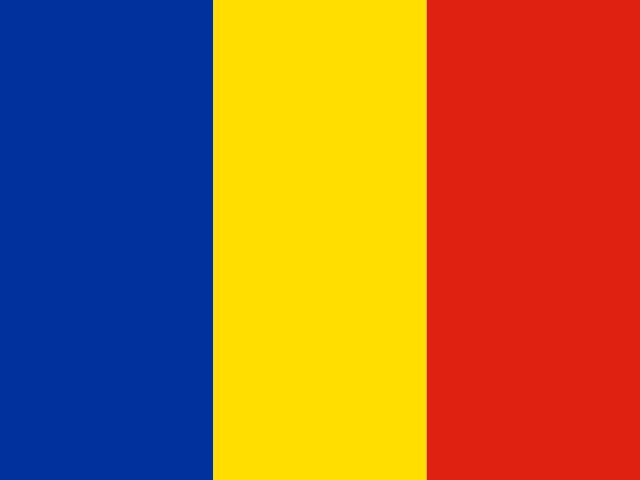 Romania
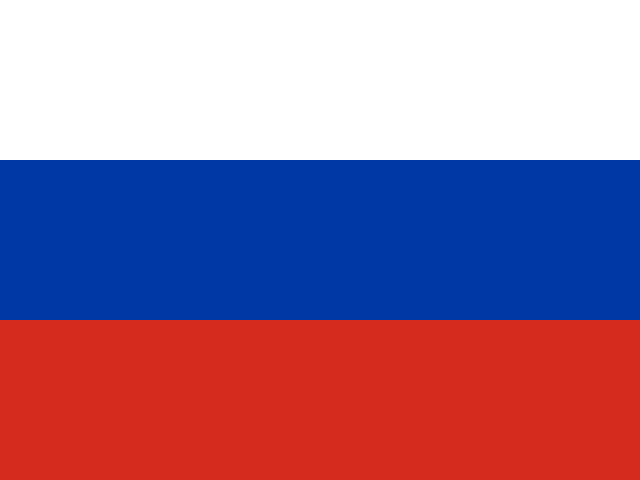 Russia
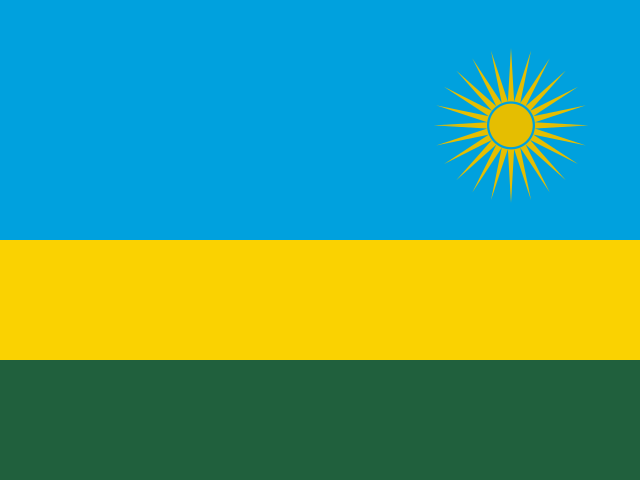 Rwanda
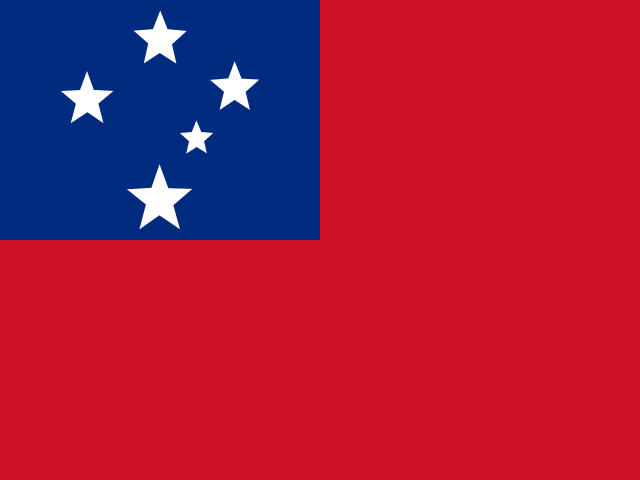 Samoa
Samoa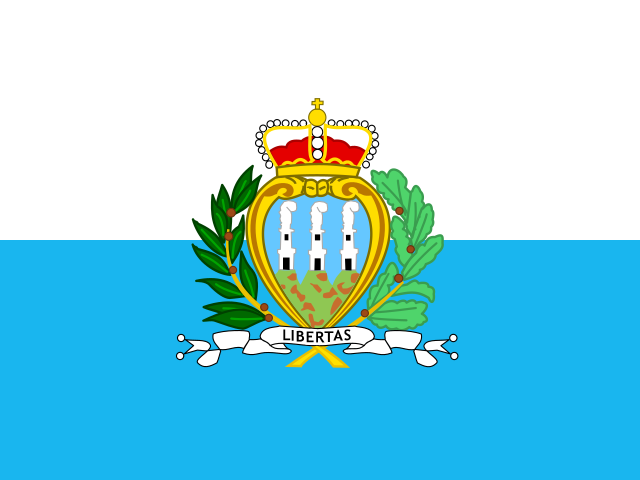 San Marino
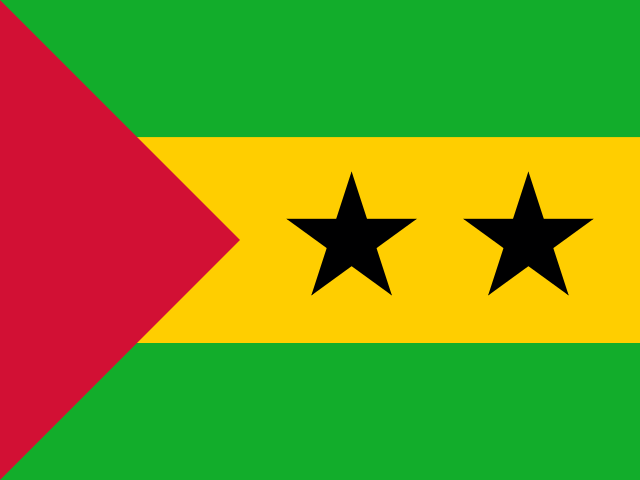 Sao Tome and Principe
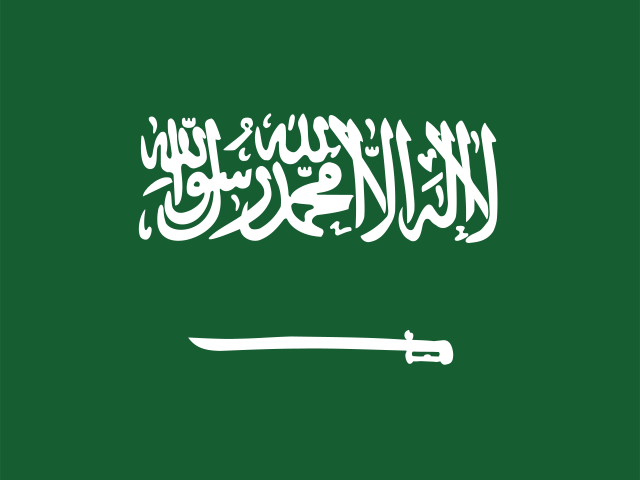 Saudi Arabia
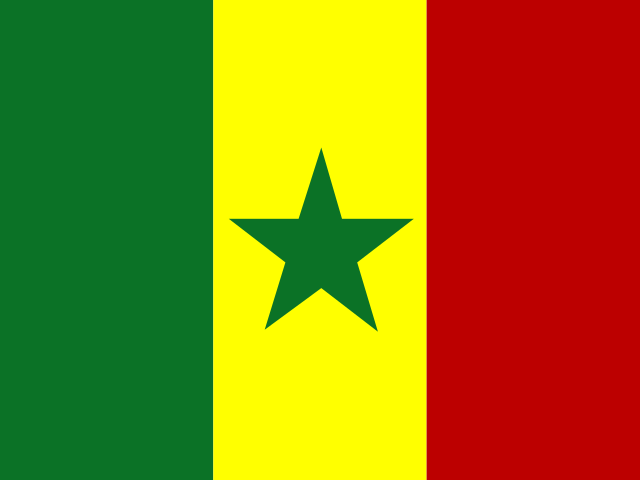 Senegal
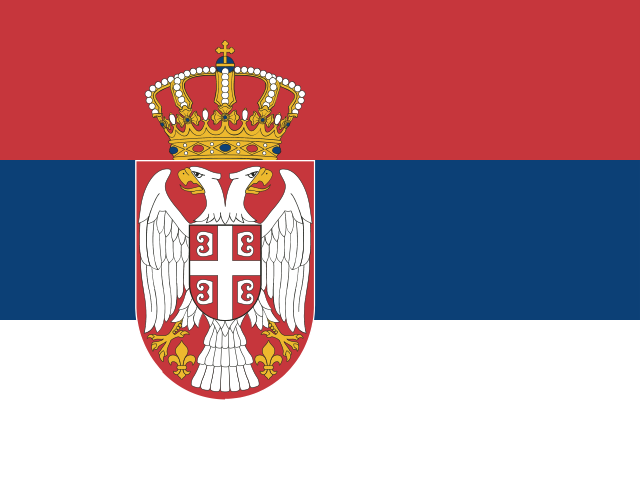 Serbia
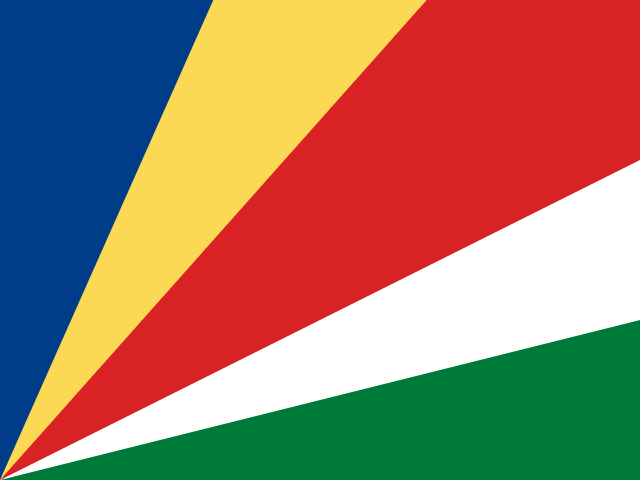 Seychelles
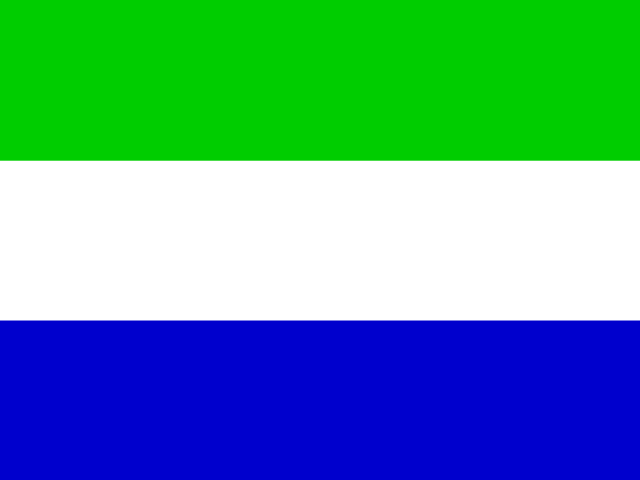 Sierra Leone
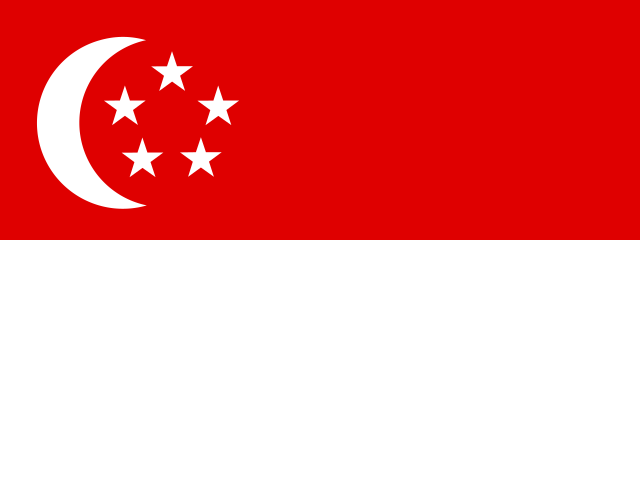 Singapore
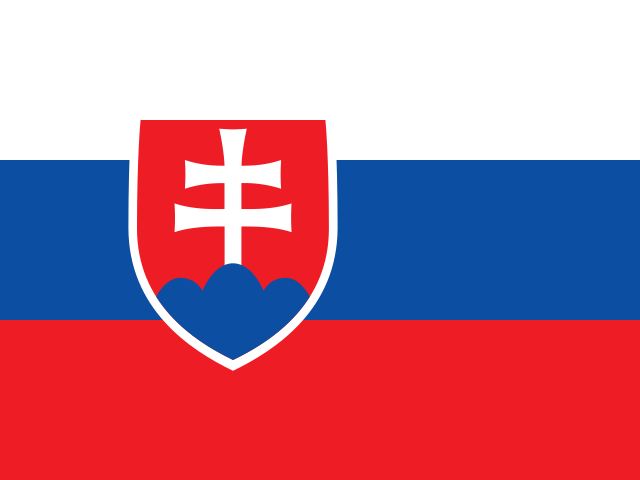 Slovakia
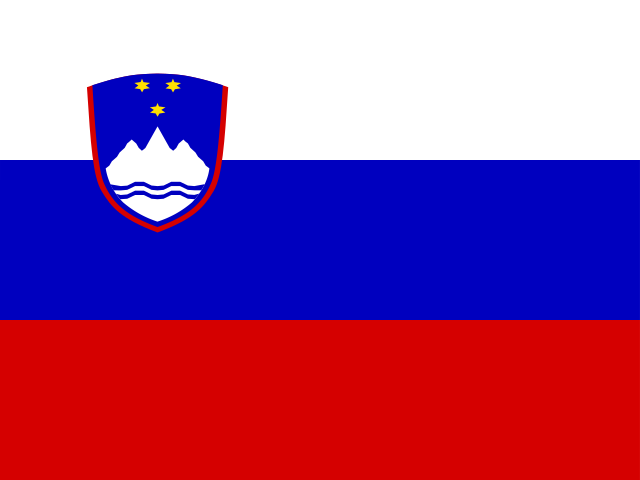 Slovenia
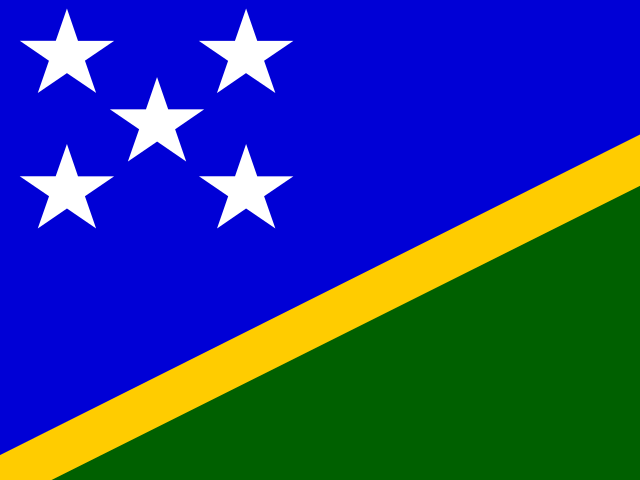 Solomon Islands
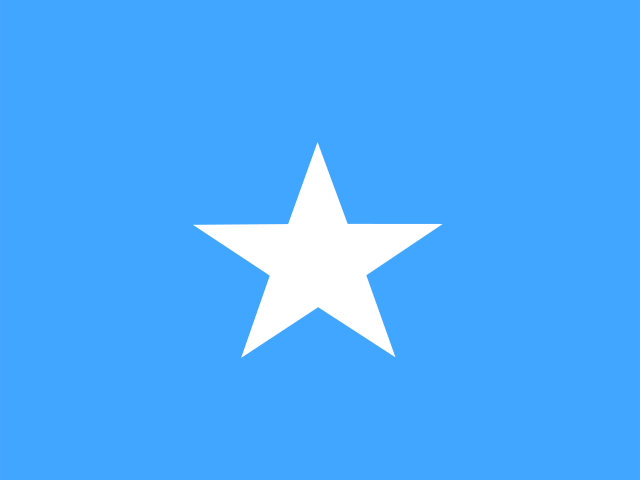 Somalia
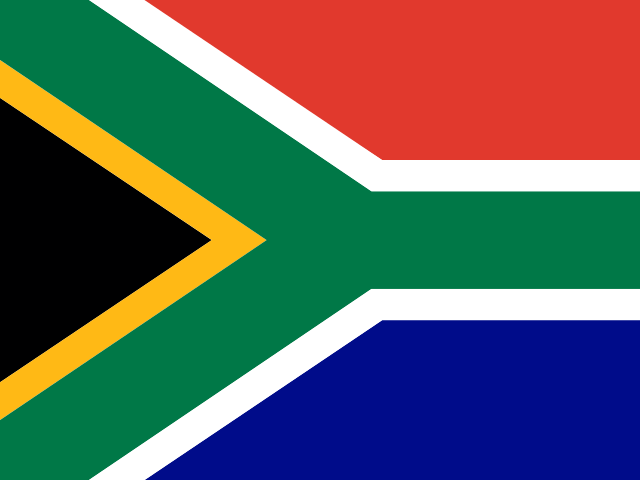 South Africa
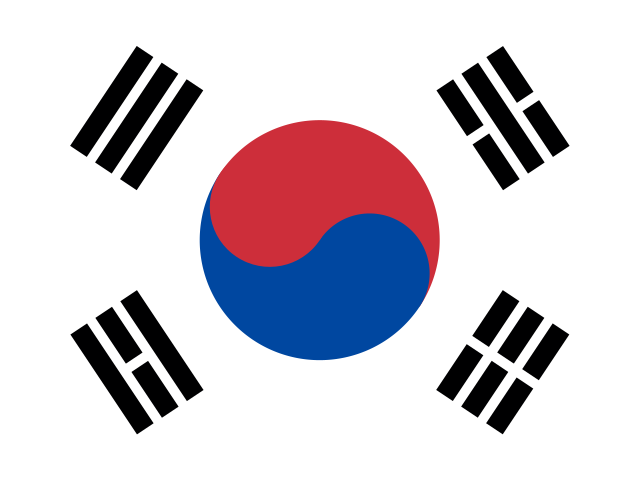 South Korea
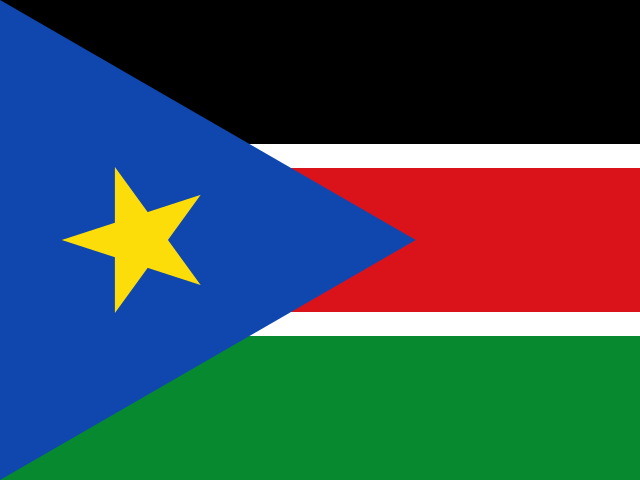 South Sudan
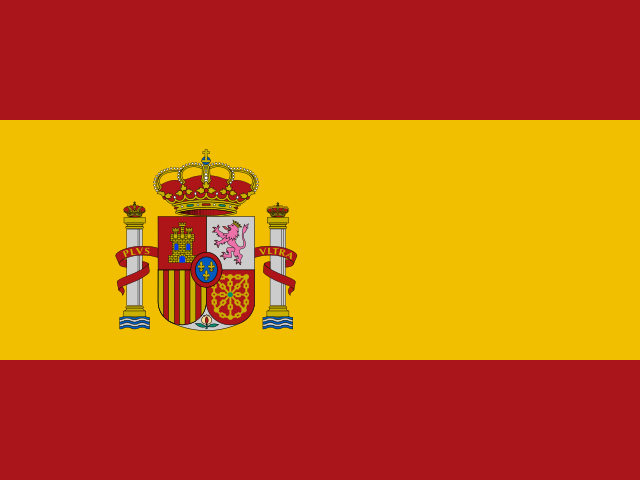 Spain
Spain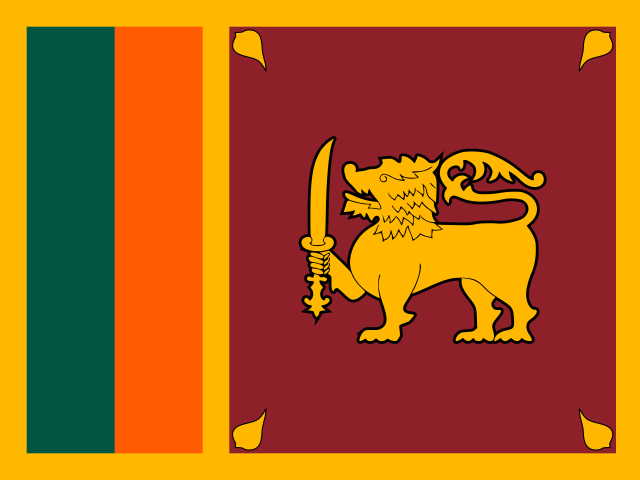 Sri Lanka
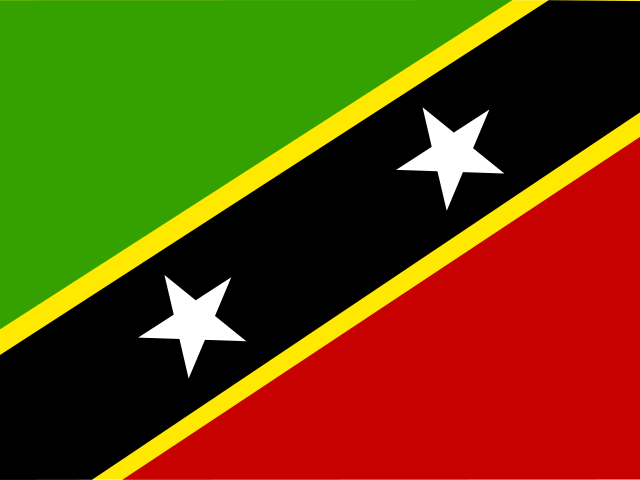 St Kitts and Nevis
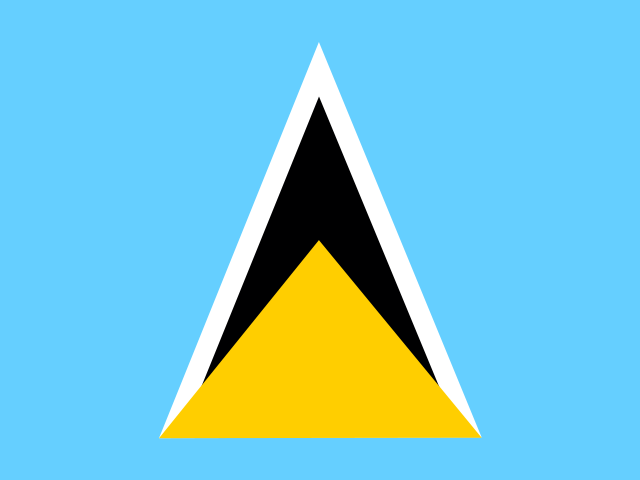 St Lucia
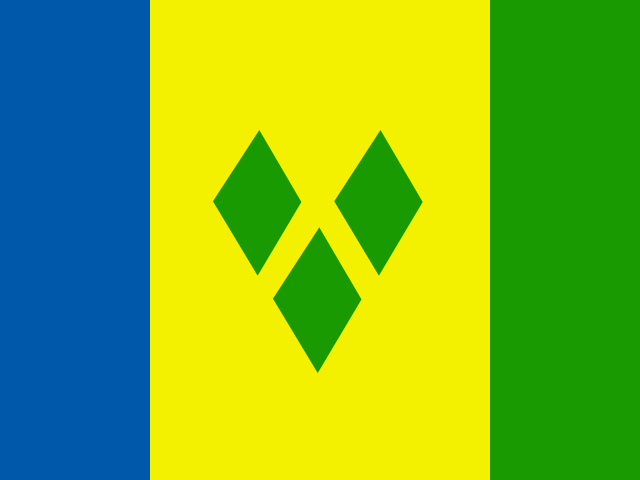 St Vincent and the Grenadines
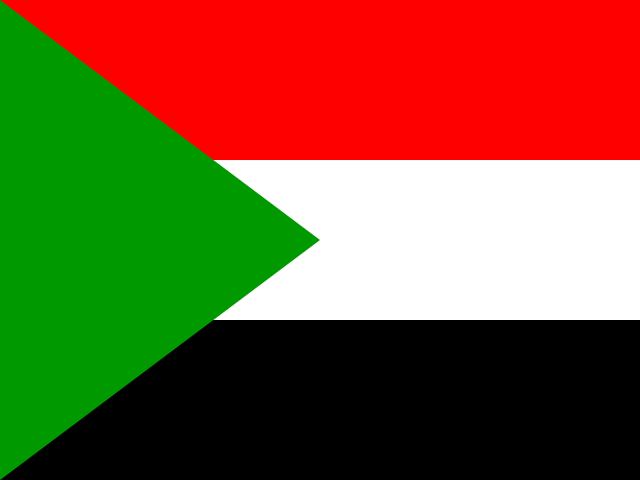 Sudan
Sudan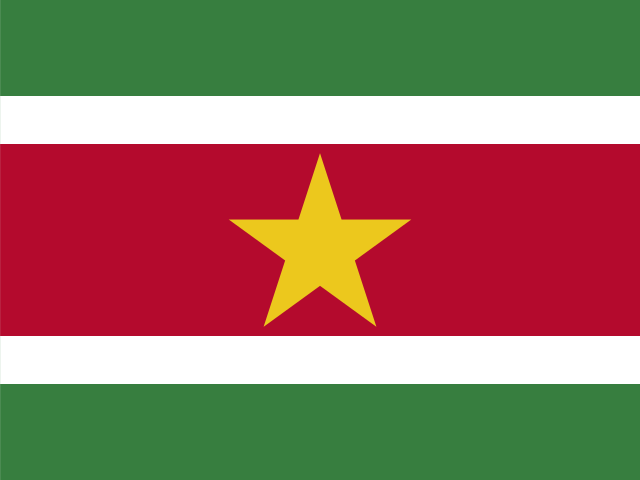 Suriname
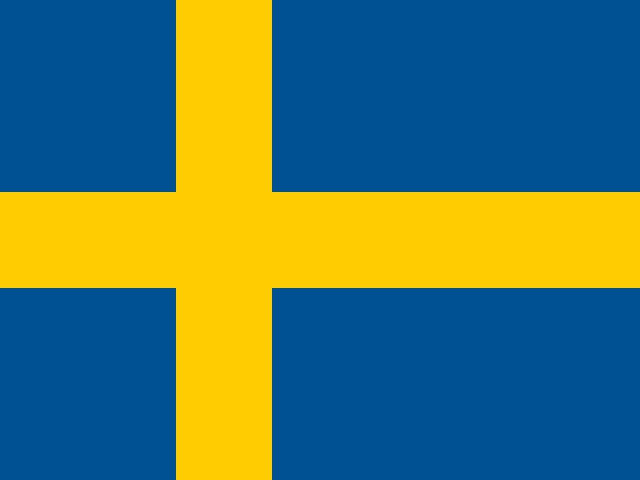 Sweden
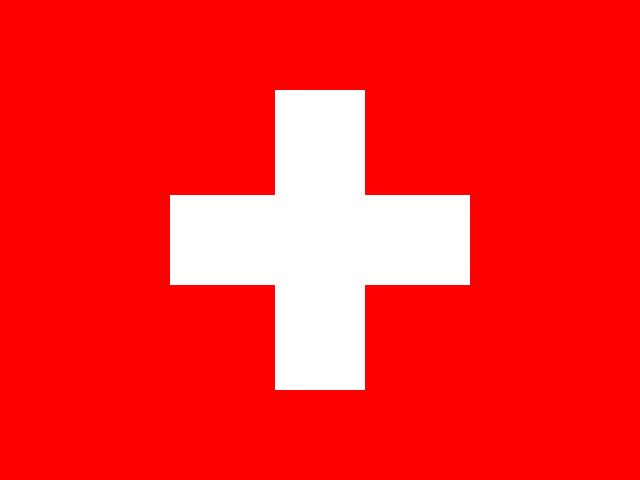 Switzerland
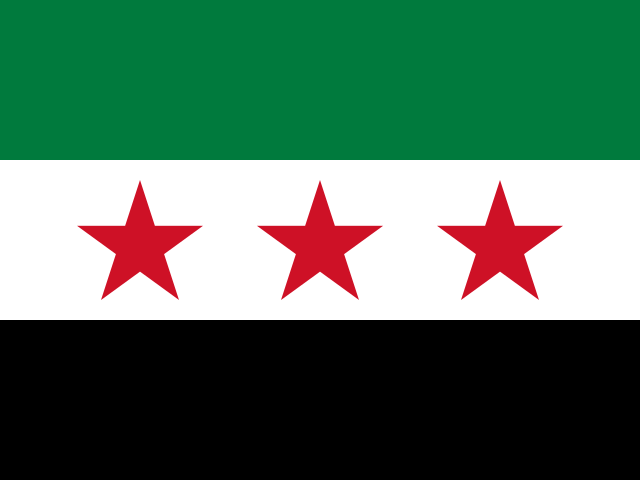 Syria
Syria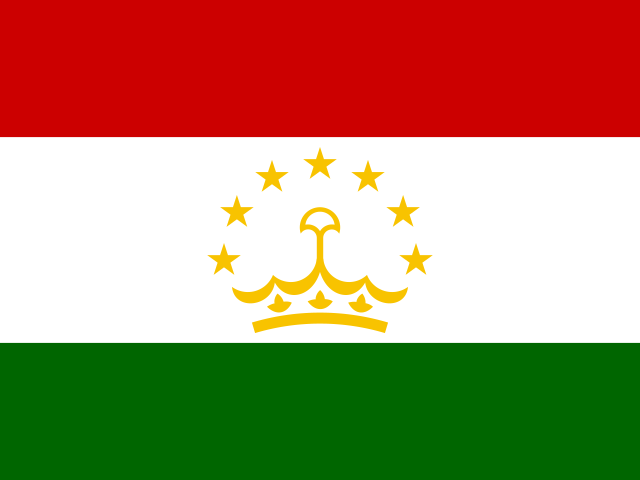 Tajikistan
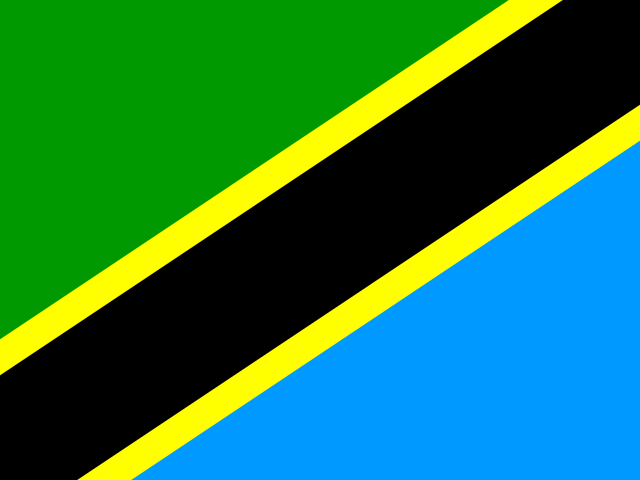 Tanzania
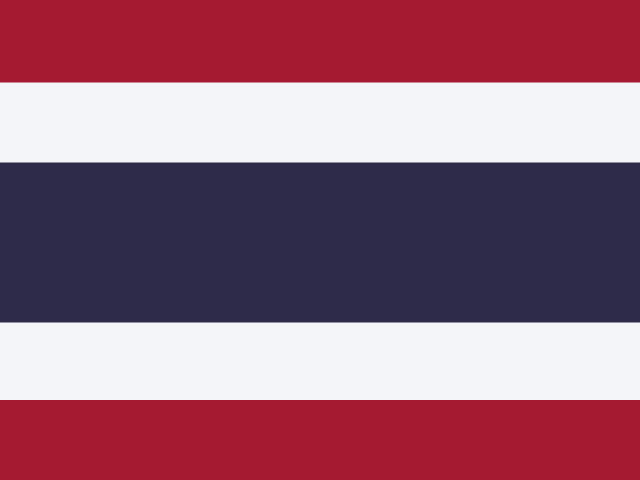 Thailand
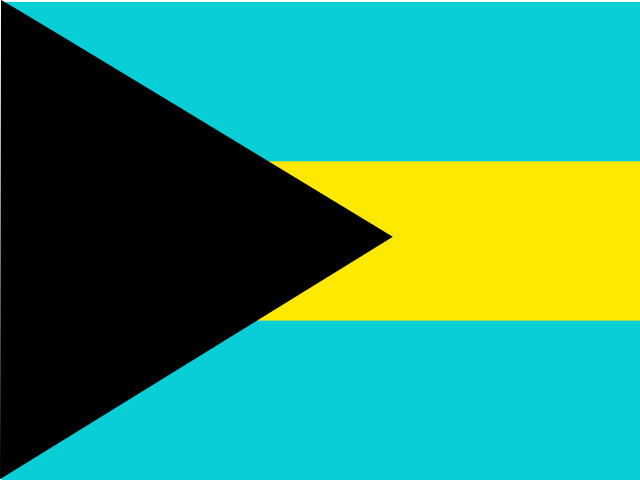 The Bahamas
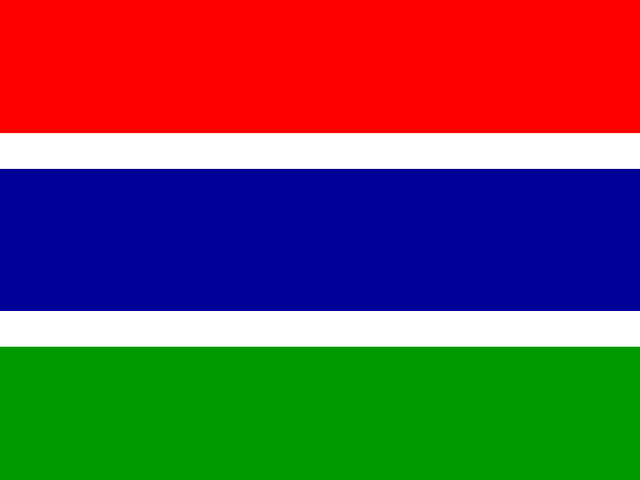 The Gambia
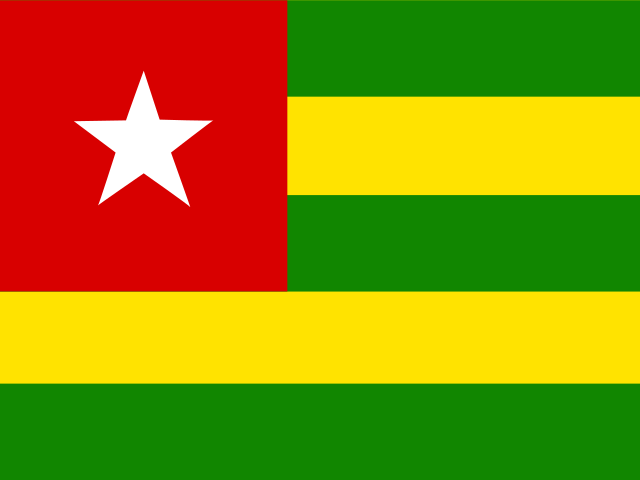 Togo
Togo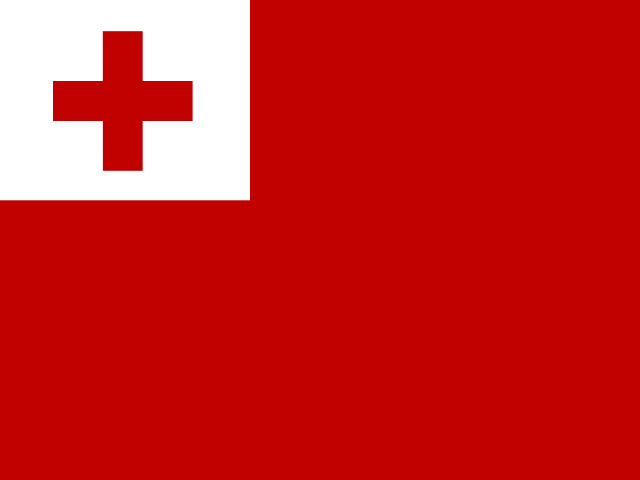 Tonga
Tonga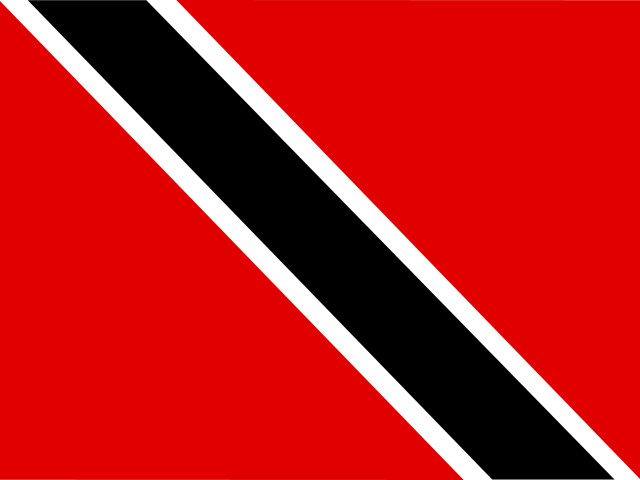 Trinidad and Tobago
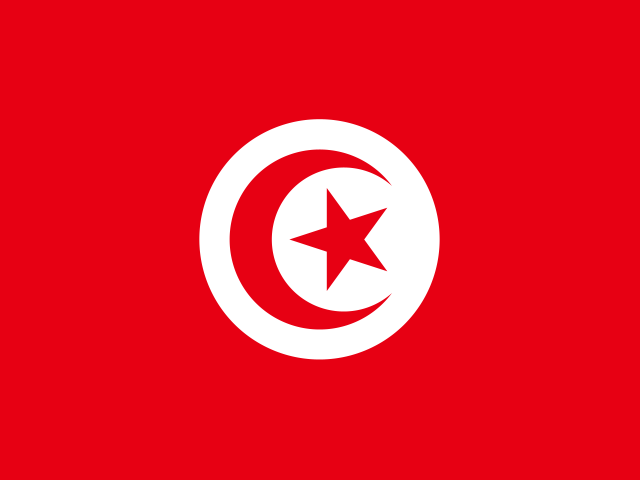 Tunisia
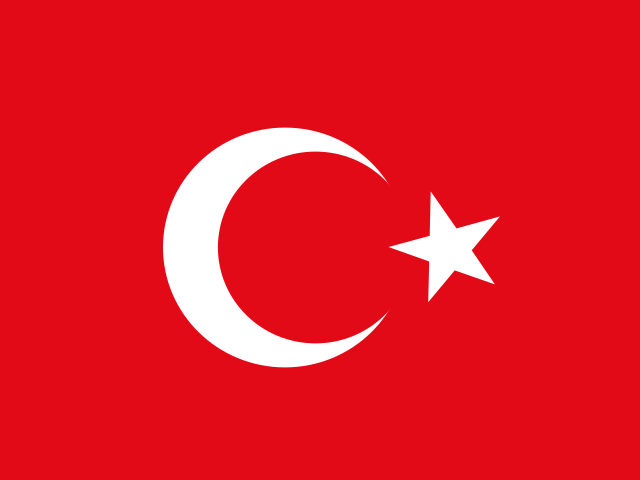 Turkey
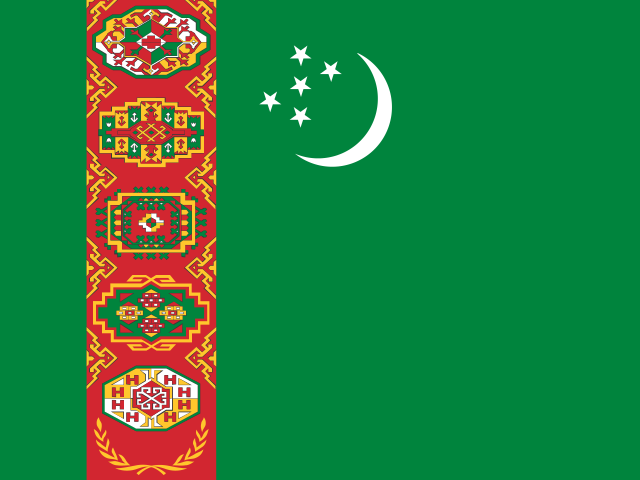 Turkmenistan
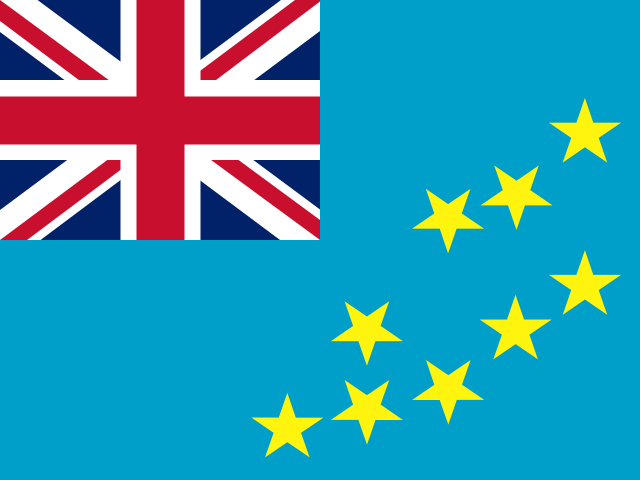 Tuvalu
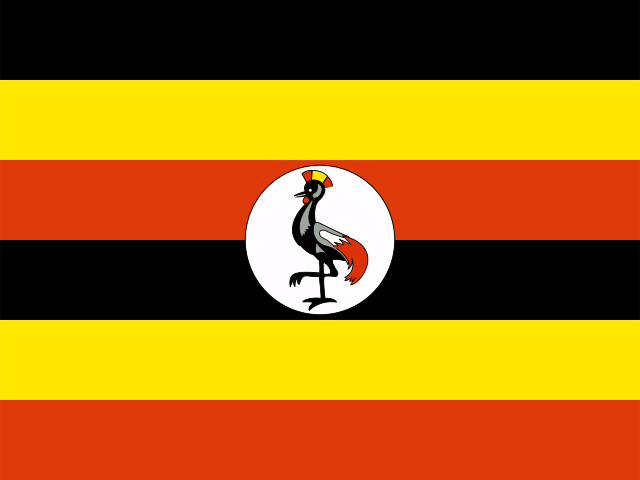 Uganda
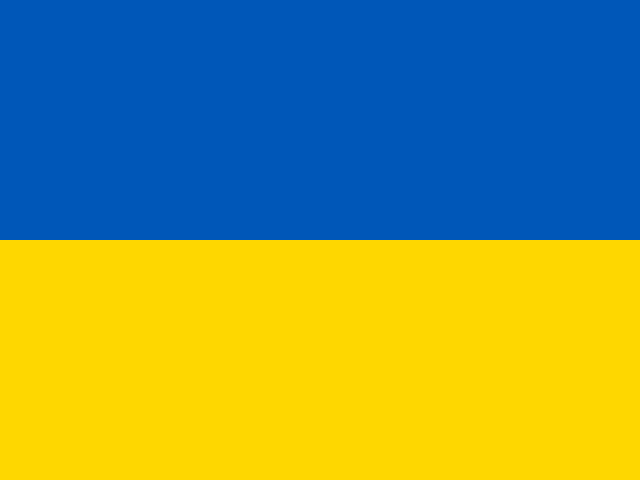 Ukraine
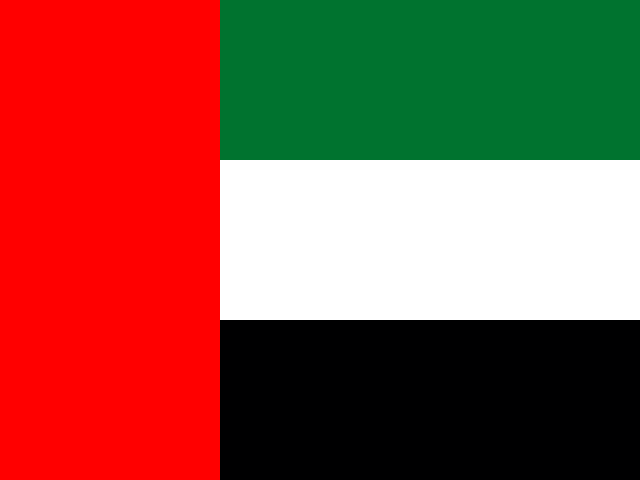 United Arab Emirates
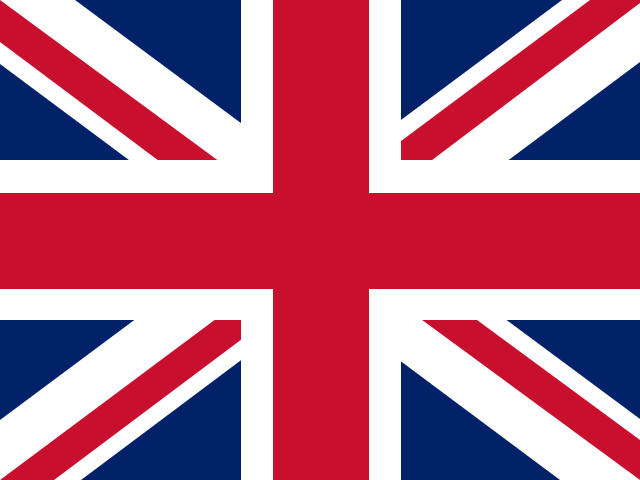 United Kingdom
 United States
 Uruguay
 Uzbekistan
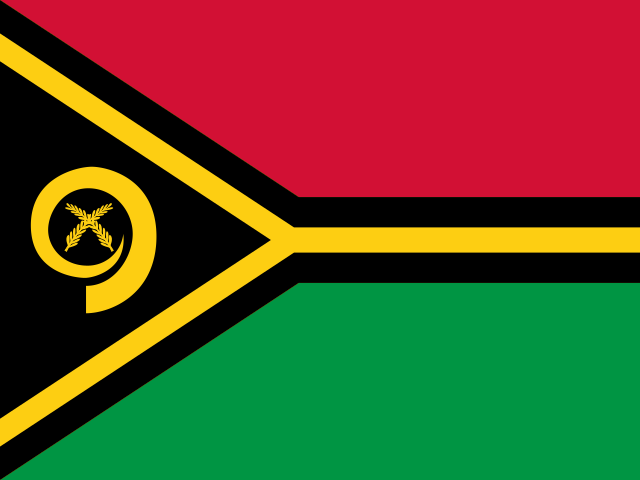 Vanuatu
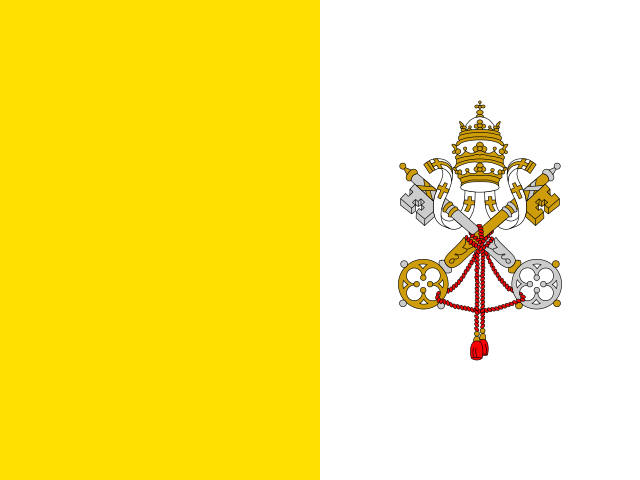 Vatican City
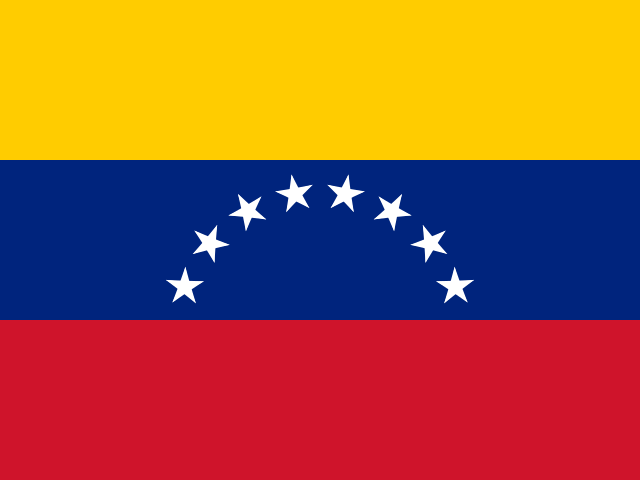 Venezuela
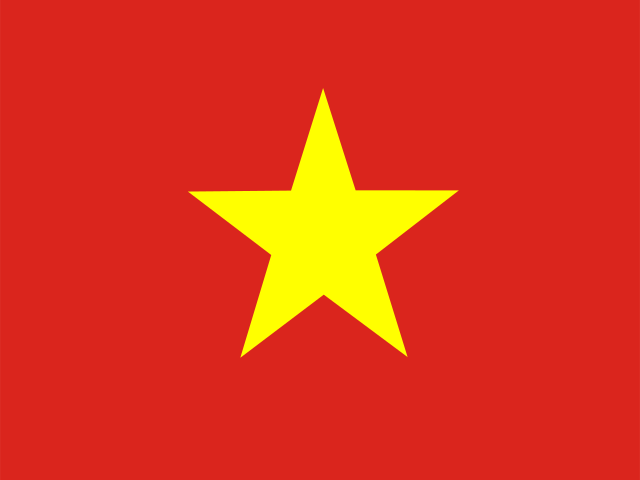 Vietnam
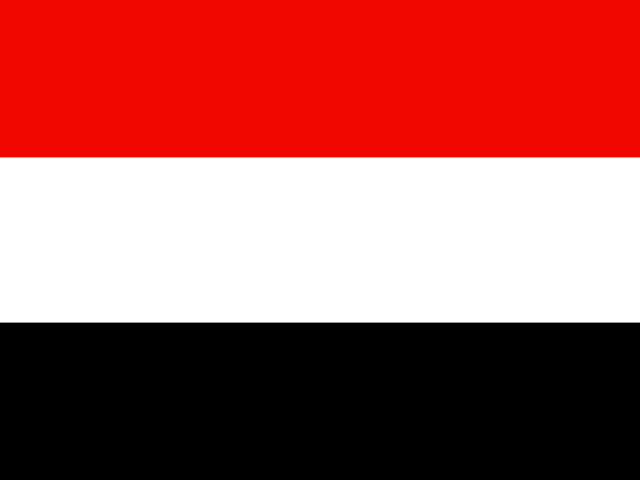 Yemen
Yemen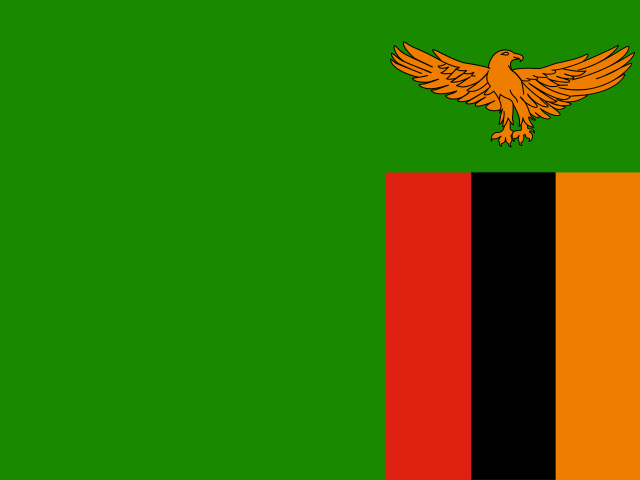 Zambia
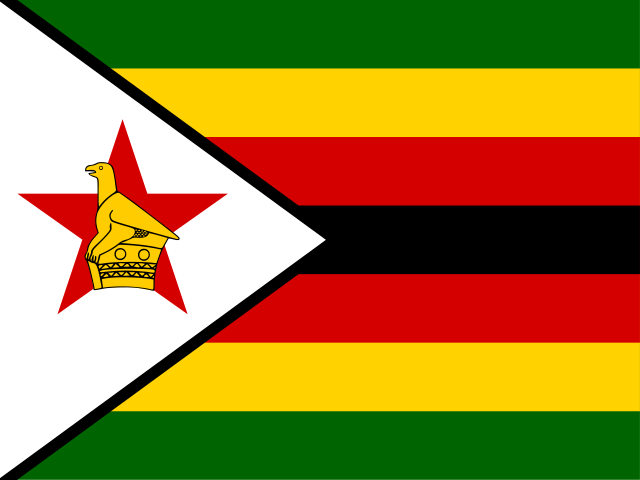 Zimbabwe
Print a quiz sheet
Prints 10 flags from the set and round chosen above, in a new random order, with a line to write each country and the answers on a second page.
Your last rounds
No round played in this browser yet.
- Built and source-checked by Muhammad Abdullah Awais
- Last checked
- 12 sources
- Methodology
Guess the flag of each of the 193 UN member states and its 2 observer states, shown with the country names the UK government uses. Choose between 4 names, type the answer or find the flag, across the world or within one region, alone or with friends taking turns. The set and the names were checked on 10 October 2026.
Three ways to play, and how a round is scored
Every round apart from the daily one is dealt in a random order from the browser's own random source, and no flag comes up twice. In the multiple choice modes the right answer sits at a random place among three wrong ones. A right answer moves on by itself after 0.9 seconds. After a wrong one, the right answer stays on screen until Next flag is pressed, so the miss can be looked at.
- "Name the flag: four names" shows the flag above four country names, and a tap or the keys 1 to 4 pick one.
- "Name the flag: type it" asks you to type the answer in the box and press Check or Enter. Skip gives the flag up, which counts as a miss.
- "Find the flag: four flags" shows a country's name above four flags, and the task is to find the flag that belongs to it.
A round runs the same way in every mode, with no account or download. The settings under the board pick the set of flags, the mode, the level and the round. A round holds 10 or 20 flags per player or every flag in the set, and Today's ten is the daily round. The level matters only when there are answers to pick from. The easy level never offers a flag that the quiz groups with the right one, while the hard level puts the look-alike groups first. The clock counts up from the first flag and sets no time limit, so the timer only records the time taken. At the end, the result shows the score as right answers out of flags asked, and the time. It adds the longest run of right answers in a row and a row of green and red squares in the order played. Every missed flag is listed with the answer that was given.
How many flags are there in the world?
The number depends on what counts as a country, so this quiz fixes its own set of 195 flags. They belong to the 193 member states on the United Nations' list and to the 2 non-member observer states it also names.
The UN's member list prints no total, but it has 193 entries, each with a date of admission; the latest is South Sudan, admitted on 14 July 2011. Its list of non-member states gives the Holy See and the State of Palestine a standing invitation to take part as observers. General Assembly resolution 67/19 of 29 November 2012 gave Palestine non-member observer State status.
In the quiz the two observers appear as Vatican City and Palestine, the short names the Foreign, Commonwealth & Development Office (FCDO) uses. Other flag lists give 194, 196, 197 or 254, depending on how they treat the observers and whether they add Kosovo, Taiwan or territories. Kosovo is on the FCDO's list of names, yet it is not a UN member, so it falls outside this set.
The size of the set says nothing about which places are sovereign states. It only follows the UN's own two lists, which gives a fixed answer that anyone can check.
Flags by region: the five UN M49 groups
Africa gives the largest regional set, 54 flags, and Oceania the smallest, 14. The regions follow UN M49, the UN Statistics Division's standard of country and area codes for statistical use. A region comes close to a continent, but its borders are not always the same.
| Region (UN M49) | Flags | Of which UN member states |
|---|---|---|
| Africa | 54 | 54 |
| Asia | 48 | 47 |
| Europe | 44 | 43 |
| Americas | 35 | 35 |
| Oceania | 14 | 14 |
The extra flag in Asia belongs to Palestine, and the one in Europe to Vatican City. The Americas form a single region in M49, with no separate North or South America. Among the quiz's states, its sub-region Northern America holds only Canada and the United States, and every other state of the Americas sits in Latin America and the Caribbean.
Some borders differ from a school atlas. M49 places Cyprus, Turkey, Armenia, Azerbaijan, Georgia and Israel in Western Asia, Kazakhstan in Central Asia, Russia in Eastern Europe and Egypt in Northern Africa. A Europe round therefore never asks for Turkey or Cyprus, and there is no Middle East set, because M49 has no such region.
Country names as the UK government writes them
The names follow the FCDO's "Geographical names and information", which says that "All UK government departments and other public bodies must use the approved country and territory names". The Permanent Committee on Geographical Names (PCGN) gives the same short names for all 195 states in its "Country names" list.
Several of those British forms differ from other lists: Ivory Coast, East Timor, Turkey, The Bahamas, The Gambia, and Sao Tome and Principe without accents. The UN's member list, by contrast, writes Türkiye. The PCGN's timeline of name changes records that in 2026 the Republic of Nauru became the Republic of Naoero, and the UN list now shows Naoero too.
When typing, the quiz also accepts other names for the same country, so an older or longer form still counts.
- Former names: Burma, Swaziland, Macedonia and Nauru.
- Short and everyday forms: UK, USA, Holland, UAE, DRC and PNG.
- Other official spellings: Côte d'Ivoire, Timor-Leste, Türkiye, Czech Republic and Holy See.
Britain and Great Britain count for the United Kingdom too, even though Great Britain strictly leaves out Northern Ireland. England, Scotland and Wales never count, because each is one part of the UK, not the state whose flag is shown.
Capital letters, accents, punctuation and a leading "the" make no difference, so "gambia" and "The Gambia" both count. Names of up to 4 letters must be exact, which keeps "Irak" from reading as Iraq. Up to 9 letters, one typo is forgiven, and longer names allow two.
A typo is a wrong, missing or extra letter, or two neighbouring letters swapped, and it counts only when no other country is as close. "Austrlia" sits one letter away from both Australia and Austria, so it reads as neither and scores as wrong. A forgiven typo shows which country was read: "Columbia" gives "Right, read as: Colombia".
Which flags look almost the same?
Many do, and the quiz keeps 25 groups of flags that share a layout in the same or nearly the same colours. Chad, Romania, Andorra and Moldova, for instance, all show blue, yellow and red vertical stripes.
On the hard level, the three wrong answers come from the flag's own look-alikes first, then from states in the same M49 region, then from anywhere. The easy level draws all three from anywhere and never offers one of the flag's look-alikes. The groups are this site's own, made by comparing the images.
- Red over white, or white over red: Indonesia, Monaco and Poland.
- Red, white and blue horizontal stripes: Netherlands, Luxembourg and Paraguay.
- Yellow, blue and red horizontal stripes: Colombia, Ecuador and Venezuela.
- The Union Flag in the canton of a blue field: Australia, New Zealand, Tuvalu and Fiji.
- The Nordic cross, set off the centre towards the flagpole: Denmark, Norway, Iceland, Sweden and Finland.
- The Pan-Arab colours, with a triangle or band at the flagpole: Jordan, Palestine, Sudan, Kuwait and United Arab Emirates.
- A white crescent and star on red: Turkey and Tunisia.
For one tricolour, a constitution names the colours. In the Irish Statute Book's text of Bunreacht na hÉireann, the Constitution of Ireland, Article 7 reads "The national flag is the tricolour of green, white and orange". In the images, Ivory Coast shows the same colours the other way round, with orange nearest the flagpole. Italy and Mexico share the layout in green, white and red.
Where two flags differ only by a shade, the eye does the same work as in spot the different colour, where one tile hides in a slightly different shade.
Square, triangular and all drawn at 4:3
Almost every national flag is wider than it is tall, yet two in the quiz have another shape set by law. The Constitution of Nepal, published by the Nepal Law Commission, describes the flag in Article 8(1) as "two juxtaposed triangular figures with a crimson-coloured base and deep blue borders".
Among these 195 flags, Nepal's is the only one that is not a rectangle. Switzerland's federal law protecting its coat of arms, the Wappenschutzgesetz published on Fedlex, says in Article 3 that the Swiss flag shows a Swiss cross in a square field.
In the quiz, each image comes from the flag-icons set and is drawn at one shape, 4:3. The Swiss flag therefore shows as a rectangle, and Nepal's two triangles sit inside the frame with space around them. Every frame has the same shape, so apart from Nepal's pennant, the outline of a flag gives nothing away.
Nor does any Act of Parliament fix the proportions of the UK's own flag, as the next section explains.
Union Flag or Union Jack: the United Kingdom's own flag
The Department for Culture, Media and Sport (DCMS) calls it the Union Flag. Its guidance describes it as "the national flag of the United Kingdom of Great Britain and Northern Ireland, the Crown Dependencies and the Overseas Territories". Union Jack is the familiar name for the same flag, which the quiz shows for the UK.
The DCMS guidance adds that the first Union Flag was created in 1606 and combined the flags of England and Scotland, while the present one dates from 1801.
Its design comes from a royal proclamation of 1 January 1801, printed in The London Gazette, issue 15324. The proclamation reads: "the Union Flag shall be Azure, the Crosses Saltires of St. Andrew and St. Patrick ... surmounted by the Cross of St. George". In plain words, a blue field carries the saltire of St Andrew and the saltire of St Patrick under the cross of St George. The flag rests on that proclamation rather than on an Act of Parliament, and the text sets no proportions.
DCMS encourages UK government buildings to fly the flag all year round and lists designated days for it. The 2026 list includes St David's Day on 1 March, St Patrick's Day on 17 March, St George's Day on 23 April and St Andrew's Day on 30 November.
England, Scotland, Wales and Northern Ireland do not appear as separate flags here, since the set holds UN states only. The proclamation names no Welsh emblem, and no dragon appears on the flag. A dragon does turn up among the quiz's flags, on that of Bhutan.
Taking turns, today's ten and sharing a result
Up to 4 players can share one phone, tablet or computer, answering flag by flag in turn. With two or more, a line above each flag names whose turn it is, such as "Turn: Player 2".
Each player gets the round length chosen, or fewer when the set cannot give everyone that many without a repeat. With every flag in the set, the set is split evenly and leftover flags stay out: three players in Oceania get 4 flags each and 2 are never asked. Four players sharing all 195 get 48 each, with 3 left out. The result names the winner, or every player tied for first, with each player's score.
Today's ten is one set of 10 flags, the same for everyone who plays that day, whatever the mode and level. Where there are answers to pick, they match for everyone on the same mode and level. The day comes from the device's own calendar. The round always covers the world for one player, so the region and the number of players are locked while it is chosen.
Copy result puts a line with the score and the row of squares on the clipboard, followed by the link, ready to share your result in a message. The link also keeps the settings, so a friend who opens it gets the same set, mode, level, round and number of players.
Bests count only for one player and complete rounds. The quiz keeps one for each set, mode, level and round length. It also keeps the best daily round of each day and the last 10 rounds, all in this browser's local storage.
For a party round in which one player guesses and the others give clues, the forehead guessing game also runs from a single phone.
Learning the flags: study list, missed flags and a printable sheet
The study panel lists every flag of the chosen set with its name, from A to Z, and its search box finds a country by any accepted name. The world set shows all 195 flags of the world with their names, and a region narrows it to between 14 and 54.
After a round, Practise the missed flags starts a new round of only the flags that were missed, in a new order. It never counts as a best, so a practice run cannot replace a real score.
The print sheet takes the flags of the chosen set and round length (today's ten when that round is chosen), in a new random order. Each flag has a line under it for the country, and the answers follow on a second page. That makes a printable flags of the world quiz for a classroom, a club or a long journey.
Even in a region round, the easy level draws its wrong answers from anywhere on the map. The hard level keeps them close: look-alikes first, then states from the same region.
Frequently asked questions
Is there a daily flag quiz?
Yes. Today's ten offers 10 flags from the whole world, the same for everyone that day in every mode. The best daily score of each day is kept in this browser, and the copied result names the date.
Can you play a flag quiz with friends?
Yes, on one device: up to 4 players take turns, and the result names the winner or a tie. There is no online play and no account. Friends elsewhere can each play the daily round and compare copied results.
Do spelling mistakes count when typing?
Small ones are forgiven. Names longer than 4 letters allow one typo, and names longer than 9 allow two, as long as no other country is just as close. "Phillipines" reads as the Philippines, while a short name such as Iran has to be exact.
Why are Kosovo and Taiwan missing?
The set follows the UN's lists, and neither appears among its 193 member states or its 2 observer states. That choice is about where the list comes from and takes no position on either place's status.
Which level is the hardest?
Hard, in the two modes with 4 answers: the wrong ones are the flag's look-alikes, then neighbours from its region. Typing has no level, because there is nothing to choose from and every name has to be recalled.
What makes it easier for kids?
The easy level never offers a look-alike as a wrong answer, and a region set shortens the list to learn. The study panel shows each flag with its name, and the print sheet works without a screen.
Does the quiz save my scores?
Only in this browser, under "flag-quiz-results" in local storage: the bests, the daily results and the last 10 rounds. Nothing is sent anywhere, and Clear deletes them. Rounds with several players, practice rounds and rounds ended early are not stored.
Where do the flag images come from?
From flag-icons, an open source collection on GitHub published under the MIT licence, release 7.5.0. Every image is drawn at 4:3, so even Switzerland's square flag shows as a rectangle.
Sources
The figures and rules on this page were checked against these publications on .
- Geographical names and information(opens in a new tab)
Foreign, Commonwealth & Development Office
- Country names(opens in a new tab)
Permanent Committee on Geographical Names
- Union Flag flying guidance for UK government buildings(opens in a new tab)
Department for Culture, Media and Sport
- Member States(opens in a new tab)
United Nations
- Non-member States(opens in a new tab)
United Nations
- Standard country or area codes for statistical use (M49)(opens in a new tab)
United Nations Statistics Division
- flag-icons: a curated collection of all country flags in SVG(opens in a new tab)
flag-icons project on GitHub (MIT licence)
- The Constitution of Nepal(opens in a new tab)
Nepal Law Commission
- Bundesgesetz über den Schutz des Schweizerwappens und anderer öffentlicher Zeichen (Wappenschutzgesetz)(opens in a new tab)
Fedlex, Schweizerische Eidgenossenschaft
- Bunreacht na hÉireann (Constitution of Ireland)(opens in a new tab)
Irish Statute Book
- Constitution de la République de Côte d'Ivoire du 8 novembre 2016(opens in a new tab)
UNESCO (texte de la Constitution)
Related tools
- Christmas dice gameRoll for wrapped presents on one phone: a six takes from the pile, then a hidden clock runs the round of swaps and steals. Edit and share the house rules.
- Click speed testCount how fast you click with a mouse, a touch screen or the keyboard over 1 to 100 seconds, with the gaps between presses and a sourced rating.
- Lotto wheel calculatorLines, total cost and winning lines for a full wheel of your numbers on Lotto, Thunderball, EuroMillions, Set For Life and Powerball, with odds per tier.
- Padel scoreboardKeep padel score on one phone: golden point, Star Point, tie-breaks, who serves from which side and when to change ends. Free, with no app or account.
- Spot the different colour gameFind the odd tile in a grid of matching colours. The grid grows and the shade gap, measured in ΔE, shrinks as you go. Play on the clock or with lives.
- Who am I? The forehead guessing gameThe forehead guessing game on one phone: 10 British decks, tilt or tap to score, a round timer, teams, your own words and printable cards.